

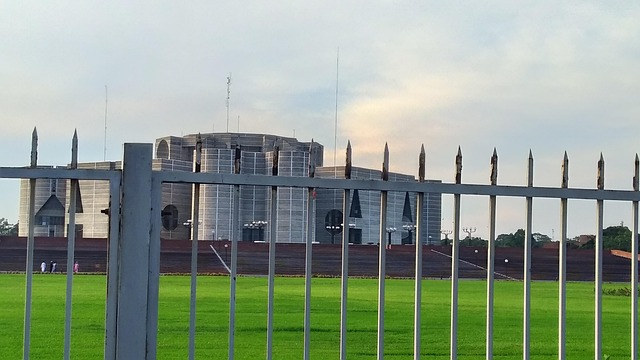
Transparency International Bangladesh (TIB) has expressed deep concern regarding the ruling party’s (BNP’s) actions, a clear example of the unilateral abuse of majority power in Bangladesh by introducing bills as supplementary business in violation of the Rules of Procedure and passing them quickly without any meaningful scrutiny or debate. Besides, they have deviated from the established parliamentary practice in the formation of parliamentary standing committees in the 13th Jatiya Sangsad (the National Parliament of Bangladesh).
In a statement issued in Dhaka on 21 July 2026, TIB Executive Director Dr. Iftekharuzzaman said, “Under Rule 77 of the Rules of Procedure, after introducing a bill, a minister may propose that a bill be referred to a standing committee or a select committee or circulated for eliciting public opinion, in addition to proposing that the bill be considered. However, established parliamentary practice generally requires referring bills to the relevant standing committee. None of these procedures was followed in the case of the Invest Bangladesh Act, 2026. The government did not consider the opposition’s proposal to refer the bill to public opinion or to a select committee and did not allow the opposition to move amendments…”
About the lack of meaningful opportunity to scrutinize bills in Parliament, TIB Executive Director said, ”…A minister cannot move a bill until copies of it have been supplied to Members of Parliament. Although it is customary for MPs to receive copies of a bill at least three days before its introduction, copies of this bill were distributed only moments before it was tabled. As a result, Members of Parliament were denied any meaningful opportunity to scrutinize the bill, while it was passed unilaterally in violation of the Rules of Procedure.”
Furthermore, the Bangladesh Medical University (Amendment) Bill, 2026 and the Public Examinations (Offences) (Amendment) Bill, 2026 were introduced in the National Parliament as supplementary business without prior notice. In addition, several other bills were passed swiftly by virtue of the ruling party’s majority, disregarding the views and objections of the opposition. Regarding these bills, Dr. Iftekharuzzaman remarked that the unilateral passage of bills, which violates constitutional principles and parliamentary rules governing the legislative process, raises the question of how the present Parliament differs from that of the authoritarian era.
Referring to Rule 188 of the Rules of Procedure, the National Parliament’s governing guidelines, on the formation of parliamentary standing committees, TIB’s Executive Director said, “The State Minister for Rural Development and Cooperatives, who has already become controversial over multiple alleged conflicts of interest, has been included as a member of the Standing Committees on the Ministry of Finance and the Ministry of Home Affairs. The extent to which a member of the Cabinet would be able to oversee the activities of another ministry and ensure its accountability remains questionable.”
Referring to the past practices, TIB Executive Director said, ”This has effectively undermined the very purpose of parliamentary standing committees at the outset. No parliament has observed such a practice, particularly in the post-1990 period. If committees are constituted by appointing individuals with conflicts of interest or controversial backgrounds as members or chairpersons, their ability and effectiveness to ensure government transparency and accountability will inevitably be called into question.”
Dr. Zaman further said, “Clause 24 of the July National Charter, to which 30 political parties and alliances jointly committed, provides that opposition members shall chair the Public Accounts Committee, the Committee on Privileges, the Committee on Estimates, and the Public Undertakings Committee. It also provides that opposition members shall chair ministry-related standing committees in proportion to their representation in Parliament. Accordingly, opposition members should chair approximately 26 percent of the standing committees. What has already happened in the formation of these committees not only confines the commitments of the July National Charter to paper but also threatens to render the ruling party’s 31-point reform agenda and election manifesto meaningless.”
Under the situation, TIB Executive Director urged the government to abandon its contradictory positions, reconstitute the already formed controversial committees, and adhere to its own declared commitments in the formation of the remaining committees. He also stated that, according to Article 78(5) of the Constitution, it is now necessary to enact the new law through consultation with all stakeholders to strengthen the authority and effectiveness of parliamentary committees.
TIB further calls for the government to ensure that each of the four parliamentary committees specified in the July Charter includes at least one woman member, and that all women members directly elected to Parliament are appointed to at least one parliamentary standing committee.
NB: Dhaka Opinion Magazine does not send its editorial team members to cover press conferences, conferences, seminars, workshops, or any other event. It selectively publishes Opinion Roundup, Conference Overview, and Convention Overview when opinion-based press releases, conference proceedings, or other similar materials are submitted or sent to the magazine. But these are subject to editing before publication based on the policy of the magazine.
DISCLAIMER: The piece was sent by TI Bangladesh to Dhaka Opinion Magazine. Views expressed are those of the author(s) and do not necessarily reflect the official policy or position of the Magazine and its editorial team. Views published are the sole responsibility of the author(s).
