

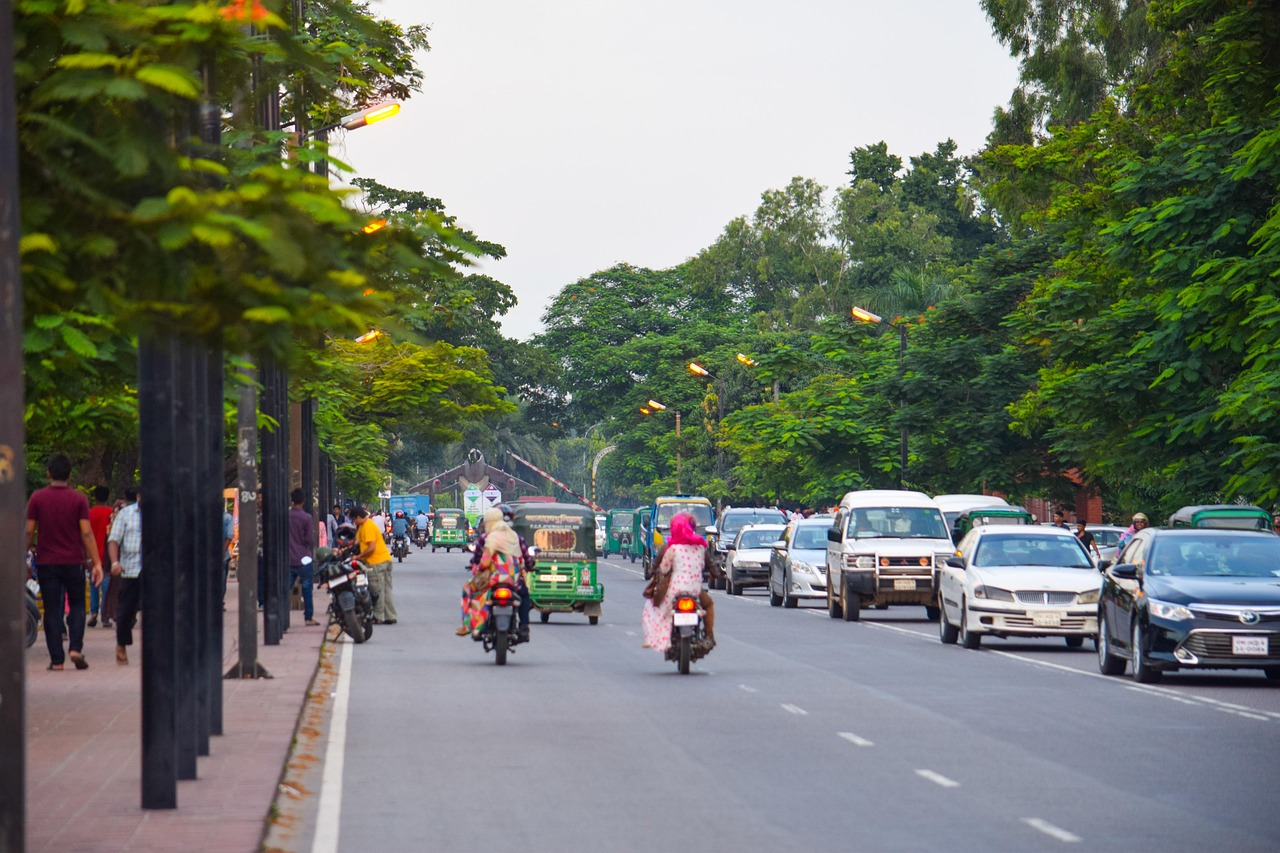
Bangladesh is a South Asian country whose geographical position is highly favorable to boost its development and prosperity. The country is recognized as the world’s only deltaic nation, with fertile soil ideal for extensive cultivation, and has tremendous development potential, owing to its strategic location, large seaports, tourism resources, youthful population, and huge rural population. However, the country is currently experiencing various macroeconomic and governance challenges, including structural constraints, that may hinder the process.
A country engages in global trade primarily through exports. Bangladesh has seen continued and substantial export growth over the decades. This is a positive side. Bangladesh’s primary export products include readymade garments, jute, jute products, leather, textiles, seafood, fish, shrimp, and pharmaceuticals. But Bangladesh has an overwhelming export dependence of 80 percent on the Readymade Garments (RMG) sector. Relying on a single industry is a serious economic threat. Because of a trade shock or a drop in demand in this industry, the whole economy could collapse. Hence, the government should revise the National Industrial Policy, provide tax benefits and simplify export clearance, along with targeted policies, for the emerging industries to promote diversification of business.
Moreover, industrial activities are highly concentrated in the urban areas because of better power supply and transport facilities. Relocating certain industrial hubs to rural areas would stimulate local labor markets, reduce urban migration, and stimulate rural development. Given the continued centralization of administrative and economic services in the capital city of Dhaka, there is a need to implement strict regulatory measures to decentralize key services (healthcare, educational institutions, administration, etc.) with strong oversight. Centralized administrative, higher education, and healthcare services around Dhaka drive intense internal migration, with 300,000 to 500,000 people moving to the capital annually, with the primary goal of seeking quality education and medical care.
Agriculture remains a key strength of the country’s exceptionally fertile soil. Agriculture has traditionally been the main driver of growth for a long time, but its contribution to the economy has been decreasing in recent years. Although Bangladesh is historically vast in agriculture, its importance is decreasing day by day due to various reasons, including industrialization. At this point, an Agro-Reconstruction Policy is needed to further promote automated cultivation, high-yielding crop varieties, and climate-resilient farming techniques through expanded access to modern agricultural technology and efficient irrigation systems.
Alongside promoting automated cultivation, high-yielding crop varieties, and climate-resilient farming, research institutes like BRRI, BADC, BINA, and BARI, along with NGOs like BRAC, have introduced notable innovations. While land preparation mechanization has reached around 95 percent nationwide, a critical field-level adoption gap remains. Even farmers are not aware of the advanced technology.
Bangladesh was a leading exporter of raw jute and jute products in the past, but the export volume has declined because of the high price of raw jute, shifting global demand, and trade restrictions like anti-dumping duties imposed by key trading partners like India. If the government invests more in specialized research centers like the Jute and Textile Product Development Centre (JTPDC) that operates under the Bangladesh Jute Research Institute, and focuses more on developing new and high-value jute-based products, Bangladesh will earn more from the golden fiber. Alongside this, it is vital to give direct subsidies to jute farmers and negotiate strategic trade agreements to revitalize this sector.
According to international standards, Bangladesh spends a very small percentage of its budget on research and development (R&D) activities: only 0.3 percent of its gross domestic product (GDP). Among others, research in higher education has seen a small percentage of the national budget in recent fiscal years. The country must invest in innovation if it is to move forward, and key areas like agriculture, public health, advanced manufacturing, and technical education cannot move forward without a steady supply of research capital.
Countries like the US, Australia, New Zealand, and Germany invest a huge amount of money in R&D, advanced technology, engineering sites, and financial systems, and benefit. They have open market ecosystems that encourage entrepreneurship, investment, and scalable innovations for global export, and provide lucrative scholarships and extensive benefits to attract international students, leveraging top-tier talent to drive their own country’s development and innovation. Consequently, people from developing countries, including Bangladesh, India, and Sri Lanka, accept those offers for a better life. Bangladesh should allocate a big budget for institutional structures, research grants, and career structures to keep high-caliber professionals in the country to stop this talent drain.
In the manufacturing sector, countries such as China have been rapidly mechanizing, whereas Bangladesh is still relying on cheap labor with inadequate technological development and technological advancement in the form of advanced machines, which limits overall productivity. If the intelligence goes to another country, this nation will always remain so far behind. This needs a holistic R&D policy and national talent recruitment strategies immediately.
The Public-Private Partnerships (PPPs) are already in practice, regulated and promoted by the Public Private Partnership Authority, and have expanded critical infrastructure, mobilized billions in private capital, and improved public service delivery over the years. But the development of strong PPPs, along with their implementation, is crucial for the construction of mega-infrastructure projects such as deep-sea ports, renewable energy plants, highways, and technical institutions.
Furthermore, the educational system should be reinforced and practical-based rather than following rigorous exam-oriented and memorization trends. Equitable educational outcomes are currently not realized due to systemic wage differences and unequal access to learning facilities. Additionally, the presence of tracks in both Madrasah and English and Bangla medium has led to a disunified educational system.
The government, in consultation with different stakeholders, should develop uniform educational programs and develop policy frameworks that require minimum education levels for civic rights and duties. Education needs to be affordable, and similarly, Technical and Vocational Education and Training (TVET) needs to be expanded. Bangladesh has a large young population; if the government trains this large population, its consequences will be outstanding.
Bangladesh is a country that is often hit by natural hazards like landslides, flash floods, and severe cyclones. Though there are comprehensive national frameworks, implementation and structural gaps need to be addressed to ensure desirable outcomes. In addition, national statistical agencies in Bangladesh have been under political pressure, unlike in advanced economies where the data is independent and timely to inform policy. It is important to have strong legal protection to ensure data integrity and reliability through the Bangladesh Bureau of Statistics (BBS) for evidence-based policymaking and monitoring SDG progress.
There are a number of critical threats that could undermine the development goals of Bangladesh if they are not properly addressed, such as political instability, a lack of effective policy implementation, high corruption, structural unemployment, increased foreign debt, and external macroeconomic shocks. The government needs to address these to ensure sustainable development.
DISCLAIMER: The views expressed are those of the author(s) and do not necessarily reflect the official policy or position of the Magazine, or its editorial team. The views published are the sole responsibility of the author(s).
