

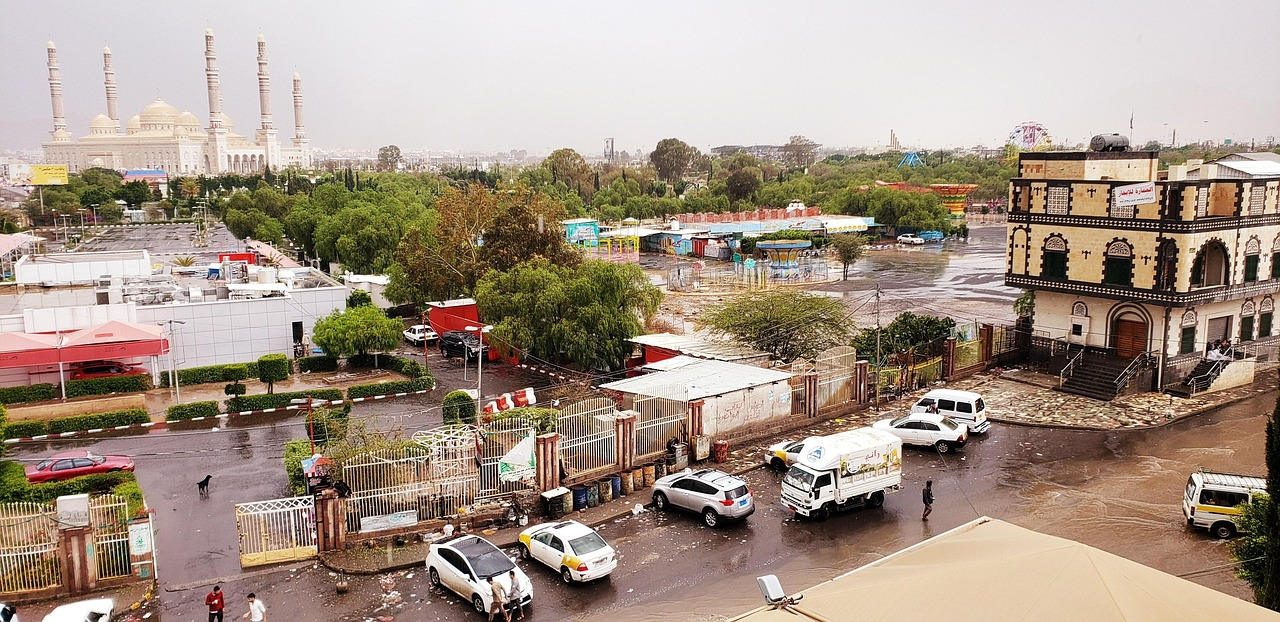
An all-out war between the Yemeni government and the Houthis has led to concerns. The government forces have started massive strikes on multiple Houthi targets across Yemen after the declaration of an all-out war by the Presidential Leadership Council (PLC), with the aim of retaking all territory held by the Houthis, amid ongoing Saudi-Houthi escalations. The government forces have already retaken several areas, including key positions near the Bab al-Mandeb, while the Houthis have carried out strikes on PLC targets. But how much the war will end remains uncertain.
There is probably difficulty in addressing the reasons for the conflict between these two parties. The conflict in Yemen — especially between the PLC and the Houthis — which has been going on for more than a decade is because of several reasons, including political, economic, ideological, and regional factors. Previous peace mediation efforts have failed to resolve the conflict between the government, which is supported by Saudi Arabia and controls Northern Yemen, and the Houthis, which are an Iran’s ally and control Southern Yemen. However, the latest conflicts are due to the renewed Saudi-Houthi conflict, the Iran war, the crisis on the Strait of Hormuz and the Bab el-Mandeb Strait, and unresolved causes.
Even if the PLC aims to retake the territories held by the Houthis, it is less likely to be easy and more likely to be challenging, given the strength of the Houthis, indicating a longer war. Moreover, the situation and the resolution of conflicts can be further complicated due to ongoing Saudi-Houthi escalations, especially since the beginning of the Bab el-Mandeb crisis a few months ago — driven by the imposition of a complete embargo by the Houthis on Saudi-linked ships. While the Houthis have already carried out air strikes in Saudi Arabia several times, the latter has already carried out strikes in Yemen, especially on Houthi targets.
The all-out PLC-Houthi war, along with the ongoing Saudi-Houthi escalation, needs to be ended quickly through immediate peace negotiations before it becomes too complicated. The continuation of the conflicts for a long time will rather increase global trade disruptions, including the disruption in global fuel supplies, worsen the humanitarian emergency, and further push for a wider regional conflict. While fuel shipments from the Gulf states have already been severely disrupted globally because of the Iran war, the Strait of Hormuz crisis, and the Bab el- Mandeb crisis, thousands of Yemenis have already been displaced in the latest escalation.
But no diplomatic efforts have started yet: neither between Saudi Arabia and the Houthis nor between the PLC and the Houthis. Along with further complicating the situation, the complexity of conflicts can make diplomatic efforts difficult — at least somewhat. But peace negotiations need to be started immediately. It is vital for peace mediation to focus on ending the Saudi-Houthi conflict, resolving the PLC-Houthi conflict, at least their renewed ongoing conflict, and addressing the fuel shipment crisis over the Bab el-Mandeb Strait.
Even though the immediate end of the conflicts, including the all-out PLC-Houthi war, is desirable, the resolution needs to seek a lasting solution, too. Without a lasting solution, it is difficult to reduce the chance of further wars between the PLC and the Houthis in the future, too. Several factors can lead to their future conflicts, including regional geopolitical complexities, conflicts of interest of the warring parties, and geopolitical gains of external powers. But for a lasting solution, two options can be considered: a one-state solution and a two-state solution.
In the one-state solution, a transitional government is needed representing all warring parties, including the PLC and the Houthis, with an election-based peaceful power transfer. In the two-state solution, two separate sovereign states can be created, such as Northern Yemen and Southern Yemen, with presently controlled territories or negotiated territories — along with allowing residents to live in their preferred state. If a one-state solution cannot be reached, peace talks need to seek a two-state solution.
