

Bangladesh’s first-ever nuclear-powered Rooppur Nuclear Power Plant, which started fuel loading a few days ago, is expected to start supplying trial electricity to the national grid very soon. After years of construction and delays, it is finally going to provide 2,400 MW of electricity, which is approximately 15–17 percent of the country’s total daily electricity demand. This nuclear power plant is being seen as a major milestone in the country. While it will contribute to a large portion of the national electricity supply, it has resulted in a significant debt burden for Bangladesh and raises an important question: Is the establishment of the power plant an economically and environmentally viable decision?
The Rooppur Nuclear Power Plant — started to be built in November 2017 during the Bangladesh Awami League government — is based on Russian VVER (Vodo-Vodyanoi Energetichesky Reaktor) reactor technology, which has been installed in countries like Russia, Ukraine, Belarus, Armenia, China, the Czech Republic, Finland, Hungary, India, and Iran, and consists of two reactor units of 1,200 MW each. The primary objective behind the establishment of the power plant is to meet the rapidly growing electricity demand in Bangladesh due to industrial expansion, urbanization, and economic development. It also aims to reduce the heavy dependency on imported fossil fuels such as LNG (Liquefied Natural Gas), coal, and oil. The plant is expected to play a significant role in diversifying the energy mix.
Although the Rooppur Nuclear Power Plant has a large economic burden, especially at the initial stage, it promises long-term benefits. It may change the country’s future electricity pricing and energy security. The project cost of the power plant is nearly 12.65 billion USD, the largest infrastructure investment in the nation’s history. This gives an approximate cost of about $5,300–5,800 per kW, which is relatively high for a developing country project. However — when compared to other projects — the cost doesn’t seem unusually high. For example, Egypt’s El Dabaa Nuclear Power Plant, which started its construction in 2022 with Russian financing, also uses Russian VVER reactor technology with a capacity of 4800 MW.
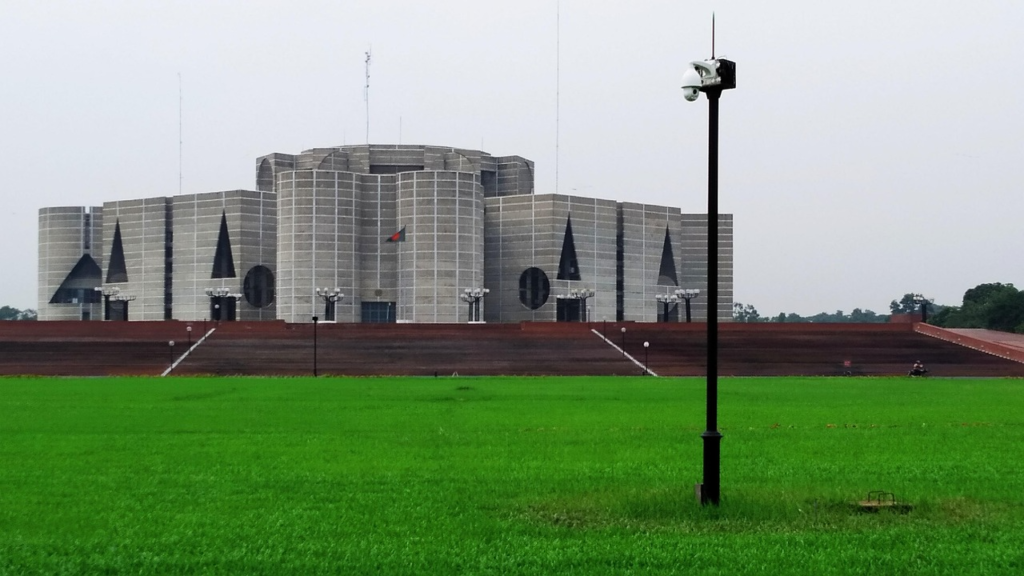
Dhaka, Bangladesh (credit: https://pixabay.com/).
The cost of the El Dabaa Nuclear Power Plant is estimated to be roughly $28-30 billion. The cost per kW is between $5,800 to 6,500. However, Bangladesh’s project appears more costly compared to Novovoronezh II (Russia) and the Astravets Nuclear Power Plant (Belarus), which are estimated at $3,500–5,000/kW and $2,000–3,000/kW, respectively, due to an established supply chain, heavy Russian financing and geopolitical pricing support. But Bangladesh is a first-time nuclear adopter and it has faced challenges like the absence of a local nuclear industry, a higher import cost, and a higher risk premium.
Bangladesh presently generates electricity from LNG, coal, oil, solar, and wind sources. The nation meets nearly 85–90 percent of its energy supply from fossil fuels, 45–60 percent from natural gas, 20–30 percent from coal, 10–20 percent from oil, and 3–5 percent from renewable sources. Additionally, Bangladesh imports approximately 8–12 percent of its electricity from India. Among these, generating electricity from natural gas is the most affordable one, costing 2.5 to 4.2 BDT per kWh. Coal-based electricity plants produce per kWh of electricity 8.25 BDT, although the price varies due to the price fluctuation of imported coal.
But electricity generated from furnace oil costs range between 10 and 17 BDT per kWh. Renewable Energy sources like solar and wind are comparatively costlier. Solar power generation costs 12-16 BDT, while wind power generation costs around 80-82 BDT. It costs multiple times higher due to poor wind conditions and the early-stage technology of this sector. In comparison, nuclear power is expected to generate electricity at 7.5 to 8.5 BDT per kWh, which is relatively stable and a potential long-term alternative in Bangladesh.
Beyond economic concerns, looking at the environmental side is vital. Nuclear power plants produce almost zero CO₂ during electricity generation, contributing to lower air pollution — as they produce no smoke, SO2, NOx, or particulate matter during operation. But there are other environmental concerns, like waste management, as it produces high-level radioactive waste and requires secure storage for thousands of years. It also has a risk of nuclear accidents. Although the probability of such accidents is low, the impact will be severe. Although it won’t contribute to carbon emissions, it requires large volumes of water for cooling, which may raise the local river temperature and hamper the ecological balance of the Padma River.
Nuclear energy is neither fully beneficial nor entirely problematic. It depends on how effectively and strategically it is planned and managed. The Rooppur project offers long-term advantages like stable and reliable electricity generation, reduced reliance on fossil fuels, and lower electricity generation costs. Nuclear-powered electricity can consequently be a more viable future energy source for Bangladesh. But these benefits come with multiple financial challenges, such as heavy capital investment and long-term debt. It may put pressure on the country’s overall economy.
But measures are needed to address the economic burden and make nuclear-powered electricity more cost-effective. Effective measures are also vital to address long-term concerns of nuclear waste and safety risks. Ultimately, the sustainability of the Rooppur power plant depends on maintaining a balance between these opposing factors. If managed effectively, the country may significantly benefit from it; if not, it could become a burden.
DISCLAIMER: The views expressed are those of the author(s) and do not necessarily reflect the official policy or position of the Magazine. The views published are the sole responsibility of the author(s).
