

Imagine a South Asia where borders do not divide families, where students and workers can travel freely, where economic opportunities are shared, and where disputes are resolved through cooperation rather than conflict. This is not a naïve longing. It is a rational and pragmatic idea born out of the harsh realities we face today. For decades, South Asia has been a region rich in history, culture, and human potential, yet it remains poor in unity and peace. The concept of a borderless South Asia maintains sovereign political identities while removing the barriers that hinder human dignity, economic advancement, and regional security.
The human cost of closed borders is considerable. Borders in South Asia have become shock points of violence and mistrust. On the India-Bangladesh frontier, which spans over 4,000 kilometers, the Indian Border Security Force (BSF) has historically exercised a strict policy against people suspected of smuggling or unauthorized crossing. According to the reports on deaths along the Bangladesh-India border, around one thousand Bangladeshi civilians were killed by border forces over a single decade. These tragedies are not abstract statistics; they are real human losses that strain relations between neighbors and erode mutual goodwill. As noted by The Diplomat, these fatalities reflect a border regime that often prioritizes force over humanitarian management.
At the centre of South Asia’s diplomatic paralysis is the fraught relationship between India and Pakistan, which fought several wars and skirmishes. The South Asian Association for Regional Cooperation (SAARC), which includes eight nations such as India, Bangladesh, Pakistan, Sri Lanka, Afghanistan, Nepal, Bhutan and the Maldives, has not held a leaders’ summit since 2014. This inactivity is largely due to persistent tensions and accusations regarding cross-border terrorism and several other causes. Recent government reports via Devdiscourse highlight how these security concerns have hindered meaningful dialogue. This rivalry has blocked the foundational promise of SAARC and left regional integration dormant.
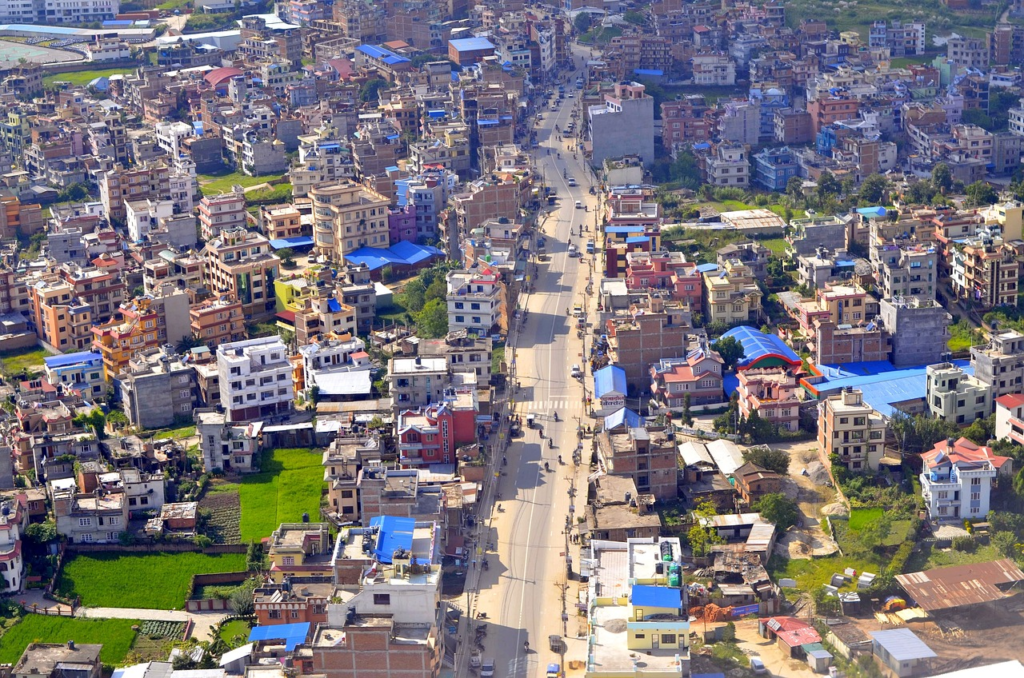
Kathmandu, Nepal (Credit: https://pixabay.com/).
The most enduring symbol of discord is Kashmir. Decades of dispute and conflicts have caused immense suffering and a geopolitical deadlock. The Pakistan-Afghanistan frontier has also remained a flashpoint and has encountered several conflicts. The latest conflicts between the two countries, which have erupted at their borders and have led to the deaths of several dozen, illustrate the fragility of bilateral relations and how border militancy frequently spills into wider conflict. Recent hostilities have also underscored how unresolved tensions become cycles of retaliation between the two parties.
A borderless South Asia offers a framework in which territorial lines matter less than shared governance and human rights. One practical adaptation would be to grant a broader regional cooperative structure. This would shift the focus from conflicting claims to common prosperity. A crucial element of this vision is a joint SAARC security force. This force would not replace national militaries. Instead, it would act as a regional mechanism for mediation and coordinated action against terrorism. By combining intelligence and strategic planning, South Asian nations could address threats that transcend borders. Shared security would be a vital confidence-building step and would prevent the mutual accusations that have long hampered regional progress.
Since terrorism has been a continuous drain on the region, the unified structures that will treat terrorism as a collective security challenge rather than a bilateral point of conflicts would make it harder for extremist groups to exploit border tensions. Beyond militancy, rising political extremism threatens social cohesion. But a regional integration model could promote shared educational initiatives and civil society partnerships that celebrate plurality. Peace is stronger when societies see themselves as equal partners instead of threats.
South Asia remains one of the least economically integrated regions in the world. As explored by Anadolu Agency, intra-regional trade accounts for only a fraction of total commerce compared to Europe or Southeast Asia. Connectivity solutions that ease customs and build cross-border infrastructure would foster trade among the South Asian countries and boost economic growth for all. A concrete milestone could be the free trade among South Asian nations and the introduction of a South Asian passport. This would allow visa-free movement for students, professionals, and families, symbolizing a shift from closed borders to shared opportunity.
By reimagining regional boundaries as bridges rather than barriers, South Asia can transition from a history of discord to a future of shared economic and strategic stability. The 18th SAARC Summit Declaration reaffirmed commitments to peace and integration. However, political friction and geopolitical rivalries have stalled these goals. A revitalized SAARC with stronger conflict resolution mechanisms could finally deliver on the promise of an economic union and help make the dream of regional integration into a reality.
Transitioning to a borderless South Asia requires gradual steps: easing visa regimes, establishing conflict resolution councils, and building economic corridors. Trust takes time, and the first steps must be mobility and joint infrastructure. Borders should be tools of cooperation, not walls of suspicion. If Europe can transform centuries of conflict into a thriving union, South Asia can begin a promising journey.
DISCLAIMER: The views expressed are those of the authors and do not necessarily reflect the official policy or position of the Magazine. Views published are the sole responsibility of the author(s).
