

Transparency International Bangladesh (TIB) has issued a statement on 13 April 2026. The organization has stated that, by including a provision in the Bank Resolution Act, 2026 that allows former shareholders of weak banks that have been merged to regain ownership of banks without any form of accountability, the government has taken an initiative to rehabilitate identified looters. As a result, the banking sector of Bangladesh is likely to once again turn into a haven for corruption and plunder, which would be self-defeating. The TIB further opines that this move perpetuates the previous authoritarian culture of impunity and lack of accountability, instead of addressing the long-standing mismanagement, irregularities, and governance deficits in the banking sector.
Referring to the amendment to a provision in the “Bank Resolution Ordinance, 2025” of Bangladesh — issued during the tenure of the interim government — which barred individuals or groups responsible for the collapse of a bank from returning to ownership even if all funds were repaid, TIB Executive Director Dr. Iftekharuzzaman said that, with the inclusion of Section 18(a) in the “Bank Resolution Act, 2026,” the government guarantees impunity instead of ensuring justice for those concerned. He further said, “Whatever justification the government may offer, this decision — one that facilitates and shields corruption and plunder—does not ensure legal accountability for those who looted the banking sector; instead, it effectively rewards them on a massive scale, making it self-defeating.“
Expressing disappointment, Dr. Iftekharuzzaman says, “… While the decision is disappointing, it is hardly surprising. The fall of authoritarianism does not necessarily mark an end to the abuse of power and forcible capture in the banking sector. Rather, under a “winner takes all” approach, it signals a shift in policy capture, leaving room for the re-emergence of kleptocratic practices after only a brief pause. This move by the government exemplifies that trend and is merely a continuation of the highly controversial decision surrounding the appointment of the Bangladesh Bank Governor.”
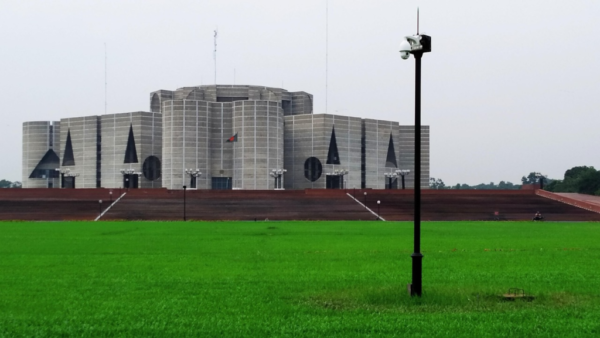
Dhaka, Bangladesh (credit: https://pixabay.com/).
The Executive Director of TIB said, “By what magic have the former owners of crisis-ridden banks, who were the pioneers of plundering this sector, suddenly attained such purity that they will deposit only 7.5 percent of the government-determined amount to re-acquire shares, assets, etc. of the same banks, while the remaining 92.5 percent will be repaid over two years at only 10 percent interest! They will inject new capital! They will cover the existing capital shortfall! They will repay all previous depositors and creditors! They will pay government taxes and revenues! They will compensate affected parties and rebuild the relevant regulatory compliance framework? Does the government have any answer to this question?…”
Expressing concerns, Dr. Iftekharuzzaman further says, “…Moreover, on what basis has the price for re-ownership been determined? Furthermore, it is not comprehensible how Bangladesh Bank, being plagued by conflicts of interest, can ensure that the announced post-reacquisition conditions will actually be implemented. Or, in reality, under the pretext of fulfilling so-called conditions, will they take new loans on self-determined terms and, taking advantage of the ongoing normalization of loan defaults, open the floodgates to deeper insolvency in the banking sector? And the burden of this will ultimately fall on the people!”
No qualitative improvement will come in this sector, if the initiative to broadly return ownership to former shareholders responsible for the collapse of the banking sector continues without ensuring their accountability through a proper legal process. Dr. Zaman said. “Under the pretext of keeping banks operational, protecting depositors, and ensuring economic stability, the government has passed a law in the parliament by majority vote that introduces a new provision supportive of corruption.”
On the government’s move, TIB Executive Director further said, “… Will this law actually help fulfil the ruling party’s electoral manifesto commitment to reform the banking and financial institutions sector? Or has such a self-defeating decision been taken to protect the interests of a vested syndicate system?” TIB urges the government to reconsider this matter.
NB: Dhaka Opinion Magazine does not send its editorial team members to cover press conferences, conferences, seminars, workshops, or any other event. It selectively publishes Opinion Roundup, Conference Overview, and Convention Overview when opinion-based press releases, conference proceedings, or other similar materials are submitted or sent to the magazine. But these are subject to editing before publication based on the policy of the magazine.
DISCLAIMER: The views expressed are those of the author(s) and do not necessarily reflect the official policy or position of the Magazine and its editorial team. Views published are the sole responsibility of the author(s).
