

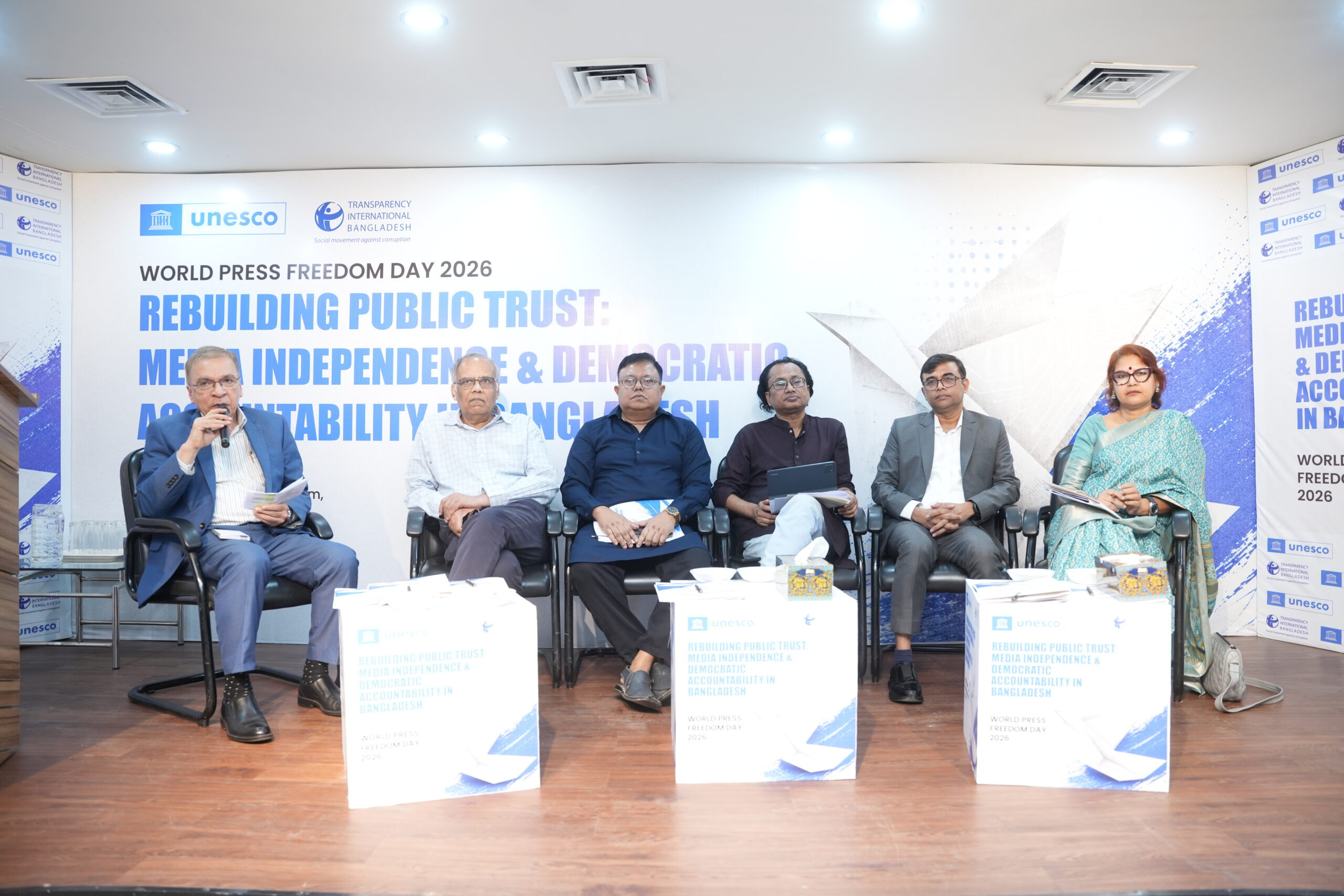
UNESCO (the United Nations Educational, Scientific and Cultural Organization) and TIB (the Transparency International Bangladesh) marked World Press Freedom Day 2026 on 3 May 2026 through a high-level dialogue in Dhaka, the capital city of Bangladesh. The event, which was held at TIB’s Dhaka office, brought together senior policymakers, editors, journalists, civil society representatives, and development partners. Discussions at the event focused on rebuilding public trust in the media and strengthening democratic accountability in Bangladesh.
Several participants spoke at the event of World Press Freedom Day, including Dr. Iftekharuzzaman, Dr. Zahed Ur Rahman, and Dr. Susan Vize, and provided their views for improving the media context. The program also featured remarks from H.E. Dr. Rüdiger Lotz, Ambassador of the Federal Republic of Germany to Bangladesh, and Ms. Paola Castro Neiderstam, First Secretary for Human Rights, Democracy and Gender Equality at the Embassy of Sweden. Moderated by TIB Executive Director Dr. Iftekharuzzaman, the program included a high-level panel discussion featuring leading media professionals and experts, including Kamal Ahmed, Consulting Editor of The Daily Star; Reaz Ahmad, Editor of Dhaka Tribune; Shahnaz Munni, senior television journalist; and Fahim Ahmed, Chairman of the Broadcast Journalists Center.
Increased public trust in the media is vital. Speaking as the Chief Guest, Dr. Zahed Ur Rahman, Adviser to the Prime Minister on the Ministry of Information and Broadcasting, emphasized the importance of strengthening the public trust through a credible and enabling media environment in Bangladesh. He said, “A credible and independent media ecosystem is essential for informed public discourse and accountable governance. Strengthening professional journalism and ensuring journalist safety require sustained collaboration across sectors.”
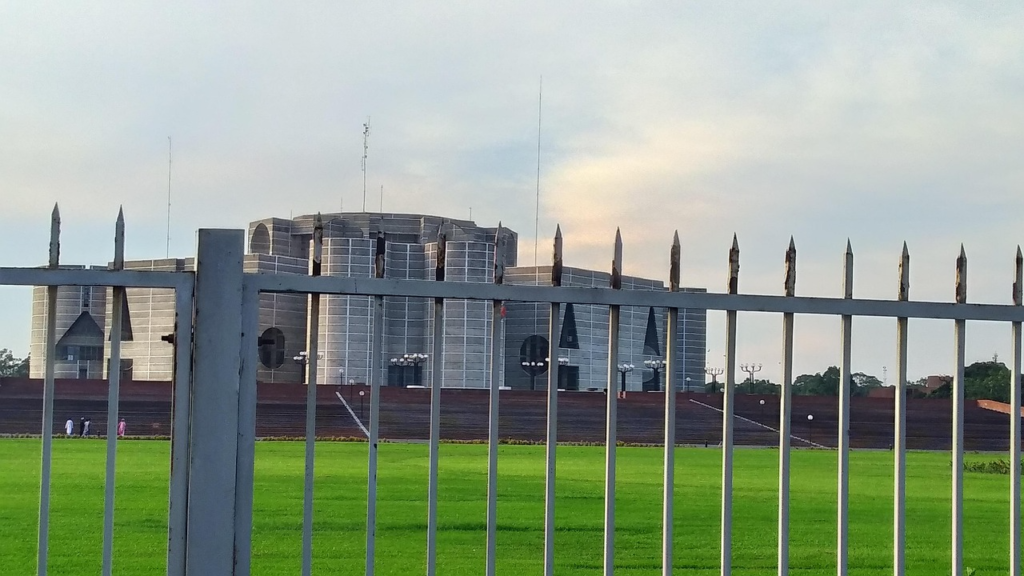
Dhaka, Bangladesh (credit: https://pixabay.com/).
The media play a critical role in any country, including Bangladesh. At the opening ceremony, Dr. Iftekharuzzaman, Executive Director of TIB, highlighted the critical role of independent media in ensuring transparency and accountability. He said, “Public trust in media is fundamental to democratic governance. Strengthening media independence and protecting journalists are essential to ensuring that citizens have access to credible information and can hold institutions accountable.”
The World Press Freedom Day, proclaimed by the United Nations General Assembly on 3 December, 1993, is observed annually all over the world on 3 May to celebrate the fundamental principles of press freedom and promote freedom of expression, assess the state of press freedom worldwide, defend media independence, and honor journalists who have lost their lives in the line of duty. Discussions in the Dhaka event this year highlighted the growing challenges facing Bangladesh’s media landscape, including, but not limited to, political and economic pressures, safety concerns for journalists, and the rapid spread of misinformation and disinformation in digital spaces.
But along with the independence of the media, media integrity is vital in any country, including Bangladesh, for the strengthened public trust. Delivering opening remarks, Dr. Susan Vize, Head of Office and UNESCO Representative to Bangladesh, noted, “Independent, pluralistic and professional media are central to informed public discourse. Strengthening journalist safety and information integrity is critical to rebuilding trust in today’s complex information environment.”
Enhanced editorial independence and media literacy are imperative for strengthened public trust. Drawing on UNESCO’s recent analyses regarding the media, participants at the event emphasized that rebuilding public trust requires stronger editorial independence, higher professional standards, and enhanced media and information literacy. But closer collaboration among media institutions, the government, civil society, and development partners is vital.
NB: Dhaka Opinion Magazine does not send its editorial team members to cover press conferences, conferences, seminars, workshops, or any other event. It selectively publishes Opinion Roundup, Conference Overview, and Convention Overview when opinion-based press releases, conference proceedings, or other similar materials are submitted or sent to the magazine. But these are subject to editing before publication based on the policy of the magazine.
DISCLAIMER: The piece was issued by UNESCO and Transparency International Bangladesh and sent by TI Bangladesh. The views expressed are those of the author(s) and do not necessarily reflect the official policy or position of the Magazine and its editorial team. Views published are the sole responsibility of the author(s).
