

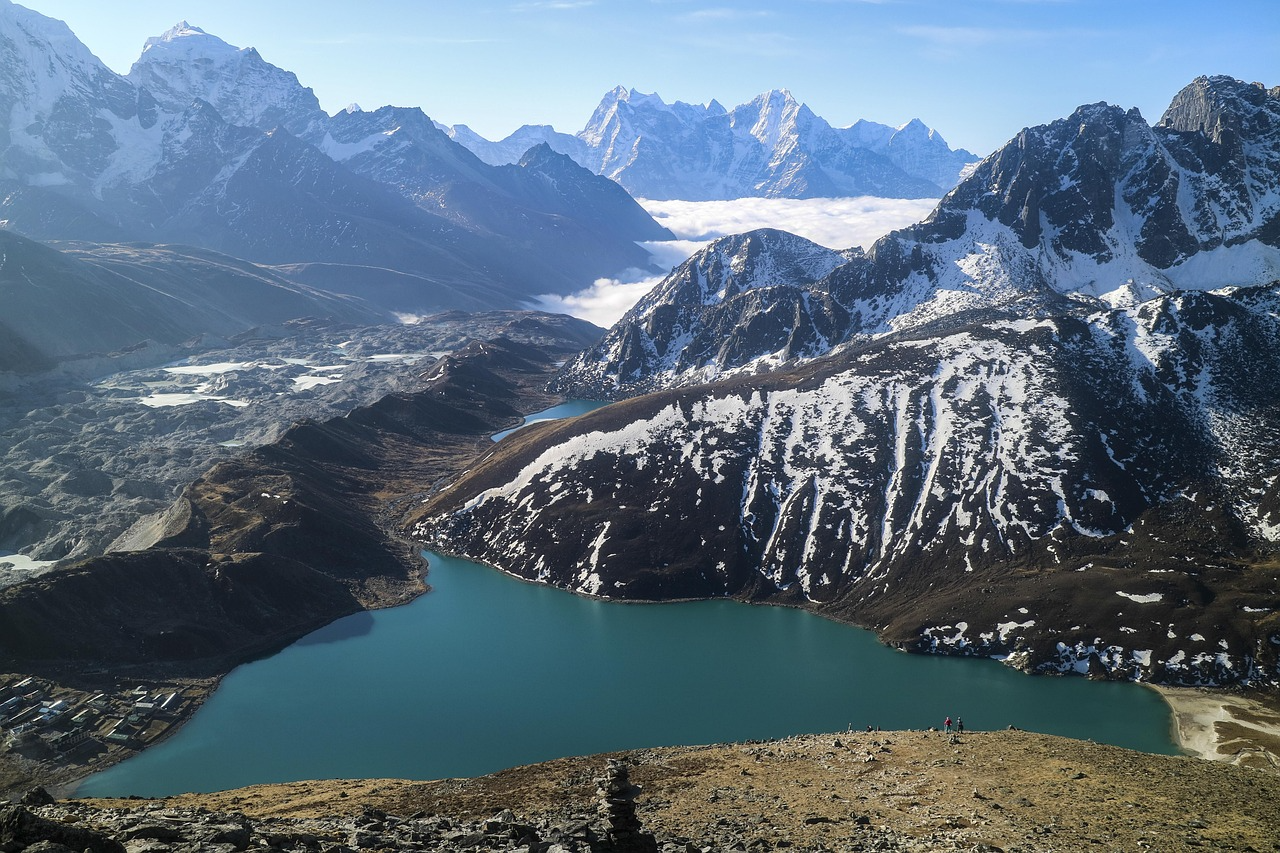
The images coming out of Nepal after the devastating flash flood of August 26 are difficult to absorb. The roads have disappeared, the bridges have been swept away, the homes and infrastructure have been destroyed, and hundreds of people have lost their lives or remain missing. In the mountains of Rasuwa, the Bhote Koshi River became the pathway of a disaster that arrived with extraordinary speed and force.
Nepal — one of the South Asian countries — has always lived with various climate events, such as natural floods, landslides, avalanches, and earthquakes. But that would miss the larger warning contained in what happened last month. The August 26, 2026 disaster should compel South Asia to look again at the changing Himalayas, and at what those changes mean for millions of people far beyond Nepal.
The book “Himalayas to Indian Ocean: South Asia’s Climate Change Challenges” offers a useful lens through which to understand this moment. In her discussion of Nepal in this book, environmental author and policy analyst Simi Garewal points to the rapid melting of Himalayan glaciers, changing water availability, and the growing danger of glacial hazards. She also emphasizes that climate change is not an isolated environmental problem. It affects agriculture, infrastructure, livelihoods, biodiversity, and the wider economy.
Nepal’s latest tragedy brings those concerns into sharp relief. The immediate circumstances of Nepal’s August 26 event are still being investigated. The current reporting indicates that a collapse involving glacial ice and rock at high altitude triggered an enormous avalanche and debris flow, which then entered the river system and produced devastating flooding downstream. It would therefore be premature to declare that climate change alone caused this particular disaster. But there is another question that cannot be postponed: Is a warming Himalaya changing the conditions under which disasters such as this can occur? The answer deserves serious attention.
Bahauddin Foizee — who has written extensively on geopolitical and environmental risks — warned of the possibility of a similar catastrophe more than seven years ago. He noted that the Himalayas are not static mountains, and that their glaciers are retreating, snowfall patterns are changing, and the stability of high-altitude landscapes is being affected by rising temperatures. This concern is echoed by Garewal in her aforementioned book, in which she highlights the dangers posed by glacial lakes and glacial lake outburst floods (GLOFs), whereby sudden releases of water can cause extensive destruction downstream.
The August 26 disaster should not automatically be classified as a conventional GLOF. Its apparent chain of events is more complicated. It, however, belongs to the same broader story: a Himalayan environment in transition and communities exposed to hazards that can develop with little warning.
That distinction matters because climate change does not have to be the sole cause of a disaster to make climate adaptation urgent. The Himalayas have always been dangerous. The question is whether a changing climate is making some of those dangers harder to anticipate and manage. For Nepal, the answer to this question has enormous consequences. The mountain communities depend on rivers for agriculture, drinking water, and energy. The roads and bridges often run through narrow valleys because geography leaves few alternatives. The hydropower facilities are concentrated around water systems. Tourism depends on the stability and accessibility of the mountains.
When a major flood or debris flow destroys infrastructures, the loss is not merely physical. If it destroys a bridge, a community may suddenly lose access to markets, hospitals, schools, and emergency services. If it damages a road, an entire population of a locality becomes isolated. Similarly, a destroyed hydropower facility can become an economic loss extending far beyond the immediate disaster zone.
This is one of the most important arguments running through Garewal’s book: climate change is inevitably a development challenge. The money required to repeatedly rebuild damaged infrastructure is money that cannot easily be spent on education, healthcare, poverty reduction, or economic development. For vulnerable communities, one major disaster can erase years of progress. That is why Nepal needs to think beyond disaster response. It needs infrastructure designed for a changing climate. But Nepal cannot do this alone.
One of the strengths of Garewal’s ‘Himalayas to Indian Ocean’ book is its insistence on seeing South Asia as an interconnected region. The Himalayas do not belong to one country in environmental terms. Their glaciers feed river systems that sustain communities across borders. What happens in Nepal has implications for India. India’s rivers eventually flow into Bangladesh. Bhutan shares the same mountain environment and faces similar glacier-related risks. Pakistan depends heavily on Himalayan and Karakoram water systems.
The climate vulnerabilities differ, but the connections are undeniable. Bangladesh faces devastating floods and river erosion; India is confronting extreme heat, erratic rainfall, and water stress; Pakistan has endured catastrophic flooding and severe heatwaves; Bhutan faces glacial retreat and the threat of glacial lake outbursts; Sri Lanka faces changing rainfall, coastal erosion, and rising temperatures; and The Maldives confronts the existential threat of rising seas. These are not separate climate stories of South Asian countries, but one regional story with different chapters.
That is precisely why Nepal’s tragedy should trigger a stronger conversation about regional cooperation. Countries sharing Himalayan rivers and ecosystems need better mechanisms for exchanging information about glaciers, rainfall, river levels, landslides, and other hazards. The early-warning systems need to reach remote communities — not simply government offices. The disaster agencies need the ability to communicate rapidly across borders. A warning is useful only if people receive it in time, understand it, and have somewhere safe to go.
There is also a deeper lesson about environmental stewardship. To deal with climate change, it is vital to focus on reforestation and conservation as part of the country’s resilience strategy. Forests cannot prevent every flood or landslide, but healthy ecosystems, properly managed watersheds, and careful land-use planning can strengthen communities against environmental shocks. The choice facing Nepal is, therefore, not between development and environmental protection. The real challenge is to make development resilient enough to survive an increasingly uncertain climate.
This is where Nepal’s August 26 disaster becomes a warning for the entire region. South Asia cannot afford to wait until every disaster can be perfectly attributed to climate change. The scientists should investigate carefully whether and to what extent warming contributed to the conditions behind this particular event. Evidence matters and climate policy should never be built on exaggeration.
But uncertainty about one disaster does not erase the larger reality. The Himalayas are warming. The glaciers are changing. The water systems are under pressure. The communities are exposed. And extreme events can cascade from mountains into valleys with devastating speed. The sensible response is preparation. This needs greater responsibility, such as building resilience, investing in sustainable practices, strengthening communities, and recognizing that South Asian countries cannot address shared environmental challenges entirely on their own.
Nepal’s August 26 disaster should therefore be remembered not only for the lives it took and the destruction it caused, but for the question it leaves behind: are we preparing for the Himalayas of the future, or are we continuing to build for the Himalayas of the past? The mountains have given South Asia another warning, and this time, the region must listen.
DISCLAIMER: The views expressed are those of the author(s) and do not necessarily reflect the official policy or position of the Magazine and its editorial team. The views published are the sole responsibility of the author(s).
