

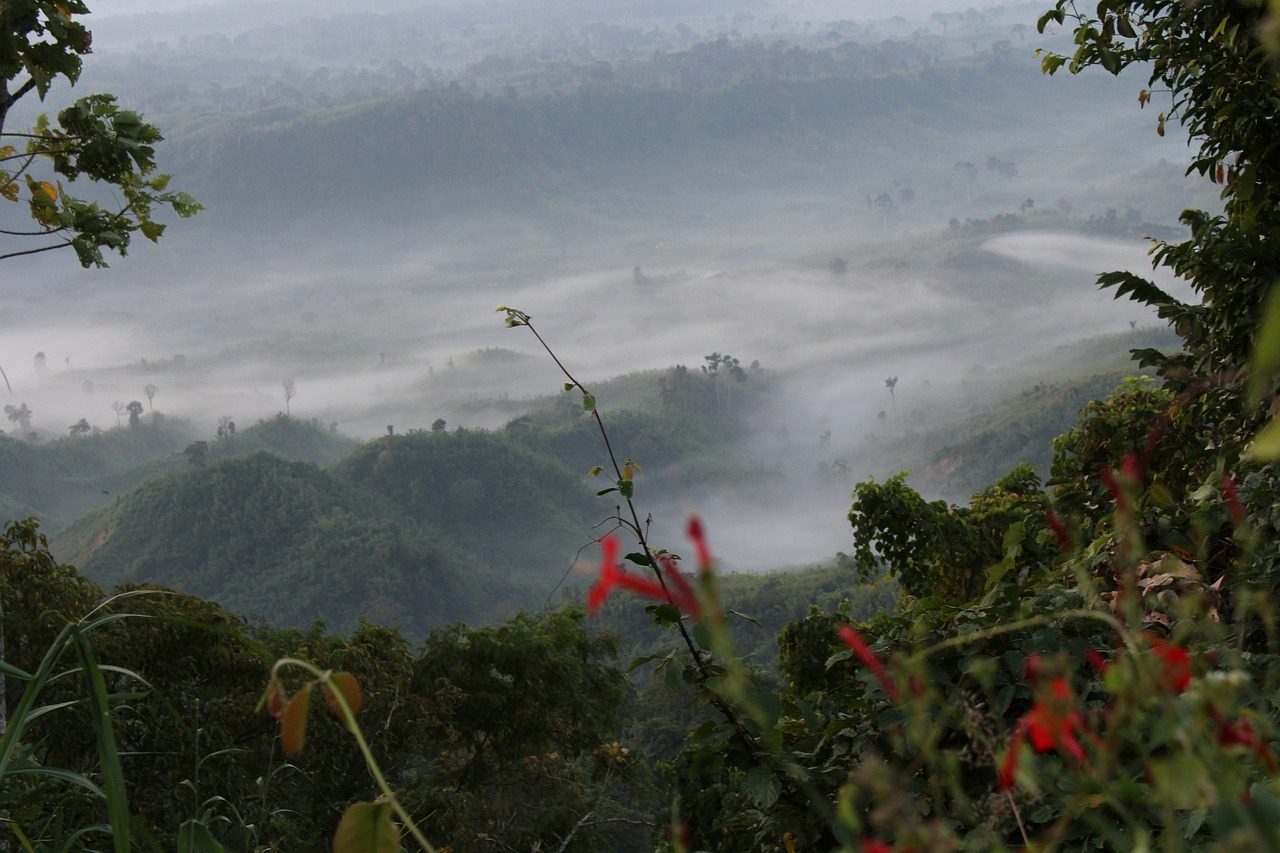
On a map, the road to Sajek is a line. For the communities who live along it, the same road can mean a patient reaching treatment, a trader reaching a market, a young person reaching school, or a family finding that a journey planned for an ordinary day has suddenly become dangerous. When violence and road closures dominate coverage of Sajek, tourism figures may be easiest to count. But the deepest measure of a road is whether the people who depend on it could use it safely and with dignity.
Reports on the Chittagong Hill Tracts (CHT) described road blockades and a confrontation in Sajek, a crucial tourist destination in Bangladesh, on 22 October 2026. The Business Standard reported a gunfight between law enforcement personnel and armed members of the United People’s Democratic Front (UPDF), a regional political organization based in the CHT of Bangladesh, along with the evacuation of stranded tourists. A later report said the government officials described the situation as under control now. The point of citing these reports is neither to decide the political dispute nor to assign collective guilt. It is to notice what uncertainty does to civilian life when a vital route to Sajek becomes the center of conflict.
There are various reasonable concerns. A trader whose goods cannot travel faces a different crisis from a visitor whose holiday must be rearranged. A teacher whose pupils cannot arrive has another. An older resident who relies on a journey for medicine may experience a closure not as an inconvenience but as a threat to his/her wellbeing. A responsible discussion of peace must hold these experiences together. It must not use the suffering of one group as a reason to ignore another.
Both secular morality and religion teach responsibility. In Luke 10 (in the Christian religion), for instance, a wounded traveler is helped by a Samaritan whom the audience might have regarded as an outsider. Jesus does not ask the injured man to settle a dispute about identity before receiving assistance. The Samaritan stops, offers practical care, and arranges for continued attention. In that story, being a neighbor is not a label that is awarded to people who agree or not. It is a responsibility that is accepted toward someone exposed to harm.
The recovery measures need to be civilian-centered. But what would a civilian-centered measure of recovery look like? There are several ways. First, every security or official access announcement should explain what local residents can do next. There is an official exemption for emergency medical travel by the route, but does it exist on the ground always? What are the conditions of general access to emergency medical journeys, given that there are law-and-order threats, regional strikes, and transport blockades along the Khagrachhari-Sajek route? Information needs to be clear, updated, and accessible in the languages used locally to ensure safety.
Second, planners should ask local people about the ordinary trips that never become headlines. That means hearing from residents who use the route for schools, small farms, trade, worship, and health care, not only the largest business interests. Women, elders, people with disabilities, and those living farther from the tourist corridor should not have to compete for the right to describe their own needs. Consultation becomes meaningful when it changes a decision, timetable, or service.
Third, there should be a way to track repairs to trust, not merely repairs to movement. A reopened road is welcome, but a road alone cannot prove that fear has lifted. Local civic leaders, educators, religious communities and community groups could help identify where families still hesitate to travel, where rumors travel faster than verified information, and where assistance is failing to reach people. Any such effort must be voluntary, protective of privacy, and free of pressure to endorse a political side.
It is tempting to speak about peace as a grand agreement reached somewhere above. Yet a peace that leaves a child absent from class, an older neighbor unable to reach care, or a small trader uncertain whether tomorrow’s journey is safe is not finished and cannot be the peace for the locals in Sajek Valley, which is visited by many from the globe every year. Peace needs to reflect the local people’s voices and concerns.
For Sajek and for every community living beside a contested road, that is the standard worth protecting. The authority should not measure the return of normal life along the road only by the vehicles passing through with its reopening. It is vital and will be helpful to understand whether the people who live there can once again make the ordinary journeys that give life its continuity.
DISCLAIMER: The views expressed are those of the author(s) and do not necessarily reflect the official policy or position of the Magazine, or its editorial team. The views published are the sole responsibility of the author(s).
