

The government cannot fulfill its promises unless corruption is effectively and visibly prevented. In light of the BNP’s 31-point State Reform Outline, electoral manifesto, and July Charter, Transparency International Bangladesh (TIB) has called for the creation of a unified strategy and roadmap for the execution of the government’s commitments to good governance and anti-corruption in Bangladesh. The call was made at a press conference of TIB titled “Implementation of Anti-Corruption and Good Governance Commitments of the BNP-led Government: Strategic Priorities Recommended by TIB” held in Dhaka on 05 March 2026.
At the event, attended by several TIB officials such as Dr Iftekharuzzaman (the Executive Director of the TIB), Professor Dr Sumaiya Khair, Tauhidul Islam, Muhammad Badiuzzaman, and Kazi Aminul Hasan, TIB presented several recommendations. TIB called for the adoption of a coordinated strategy to prevent forces within the Bangladesh Nationalist Party, the ruling political party of Bangladesh (which came to power through the 13th parliamentary elections), that are inimical to the government’s success from becoming progressively unstoppable, and for taking the initiative to formulate a Code of Conduct for elected representatives at all levels, in line with international best practices and subject to consultation with relevant stakeholders.
In its recommendations on corruption prevention, TIB has proposed measures such as vesting in the Leader of the Opposition the authority to nominate opposition party representatives to the selection committee for the ACC Chairman and Commissioners; constituting a review committee to ensure accountability of the Commission; forming an independent Integrity Unit to address internal corruption within the ACC; and introducing end-to-end automation throughout the entire process from complaint management to case conduct. At the same time, TIB’s recommendations have been made to bring private sector bribery and corruption under the law as a distinct offence, to enhance the capacity of BFIU, NBR, Bangladesh Bank, and relevant institutions to stop money laundering, and to enact a beneficial ownership transparency law.
TIB has recommended taking practical steps to ensure the independence of the judiciary, taking effective initiatives to reform intelligence agencies, repealing the Police Commission Ordinance and enacting a new Police Commission Act based on stakeholder opinions, and taking specific and visible steps to address all law and order violations, including attacks on minorities and marginalized communities. Simultaneously, a call has been made to amend the existing gaps in the Cyber Protection Ordinance and the Personal Data Protection Ordinance to reflect international best practices in protecting citizens’ fundamental rights and privacy.

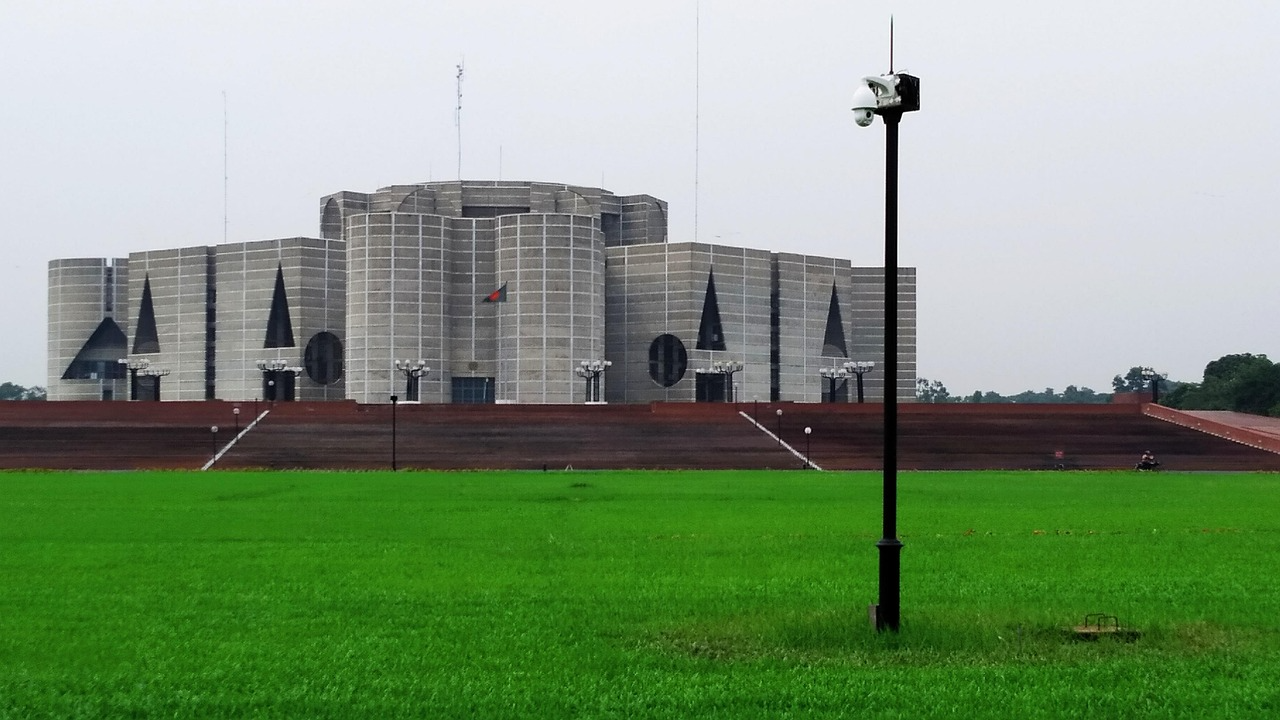
Dhaka, Bangladesh (credit: https://pixabay.com/).
Putting emphasizing on the significance of carrying out the government’s pledges to prevent corruption, TIB Executive Director Dr. Iftekharuzzaman said, “To fulfill the promise of building a well-governed and corruption-free Bangladesh, a consolidated strategy and roadmap must be formed without delay on the basis of BNP’s State Reform Outline, electoral manifesto, and the July Charter, and good governance and anti-corruption elements must be actively and mandatorily incorporated into the core of all work plans. In this regard, effectively implementing the proposed recommendations of the ACC Reform Commission, and in particular, removing the existing gaps in the Anti-Corruption Commission Amendment Ordinance 2025 to pave the way for the Commission’s genuine independence and accountability, is the most urgent need of the hour… ”
TIB Executive Director Dr. Iftekharuzzaman further said, “Furthermore, the highest priority, including a zero-tolerance directive against corruption from the top levels of the party and the government, must be accorded to ensuring integrity in the party and all party-affiliated organisations, including among the leaders, activists and supporters at various levels of the ruling party BNP, as well as among many within the bureaucracy and nearly all professional groups including business communities, where a visible ‘now it’s our turn’ culture is discernible. A well-considered strategy must be adopted to ensure that forces within BNP that are inimical to the success of the BNP government do not become progressively unstoppable.”
Advocating for the practice of requiring all elected representatives to disclose their own and their family members’ income, expenditure, and asset statements within three months of taking office and to update these annually with mandatory publication on official websites without delay, in accordance with Clause 74 of the July Charter, on which there is complete consensus, as an essential step in fulfilling anti-corruption commitments Dr. Iftekharuzzaman said, “This practice must be made applicable to all government employees and other personnel whose salaries and allowances are borne by the state, across all sectors and levels. Furthermore, the misuse of constitutional and legal authority must be deemed illegal in accordance with the July Charter’s unified proposals from all political parties…”
Among the recommendations presented by TIB for inclusion in the government’s other work plans are: proactively disclosing, in the interest of transparency, which of the ordinances promulgated during the interim government will or will not be placed before the Thirteenth National Parliament, and on what grounds; permanently abolishing the practice of whitening black money and taking immediate effective steps to formulate a specific legal framework to prevent conflicts of interest; taking the initiative to reform intelligence agencies such as DGFI, SB, DB, NSI and others that have been used as primary instruments for the institutionalization of authoritarianism, the violation of citizens’ fundamental rights, extortion, and the capture of state institutions including the financial sector; and disbanding RAB.
Moreover, ensuring all constitutional and statutory bodies are able to function in a genuinely independent manner, and ending the partisanship in the appointment of the heads and members of these institutions; ensuring appointments and promotions in all government, semi-government, regulatory, autonomous and local government institutions on the basis of merit, experience and competence above political considerations; stopping the participation of government employees in any political activities, whether direct or indirect; disbanding all existing party-affiliated professional, specialized and service-sector organizations and associations; and establishing organizations and associations free from party influence to protect the rights and interests of relevant professionals are vital.
Among others, TIB suggests that firmly resisting the practice of removing persons entrusted with responsibilities by mobilizing ‘mobs’ from various state institutions; adopting a transparent, accountable, people-friendly, corruption-free and discrimination-free development strategy grounded in equity and justice; identifying and reforming legal and institutional weaknesses that create impediments to achieving ‘value for money’ and opportunities for irregularities and corruption in all public procurement and the planning and implementation of development projects; ending syndicate control over essential commodities; and abolishing the Financial Institutions Division under the Ministry of Finance to end the dual governance structure in the regulation and oversight of the banking sector, particularly state-owned banks, are crucial.
NB: Dhaka Opinion Magazine does not send its editorial team members to cover press conferences, conferences, seminars, workshops, or any other event. It selectively publishes Opinion Roundup, Conference Overview, and Convention Overview when opinion-based press releases, conference proceedings, or other similar materials are submitted or sent to the magazine. But these are subject to editing before publication based on the policy of the magazine.
DISCLAIMER: The views expressed are those of the authors and do not necessarily reflect the official policy or position of the Magazine and its editorial team. Views published are the sole responsibility of the author(s).
