

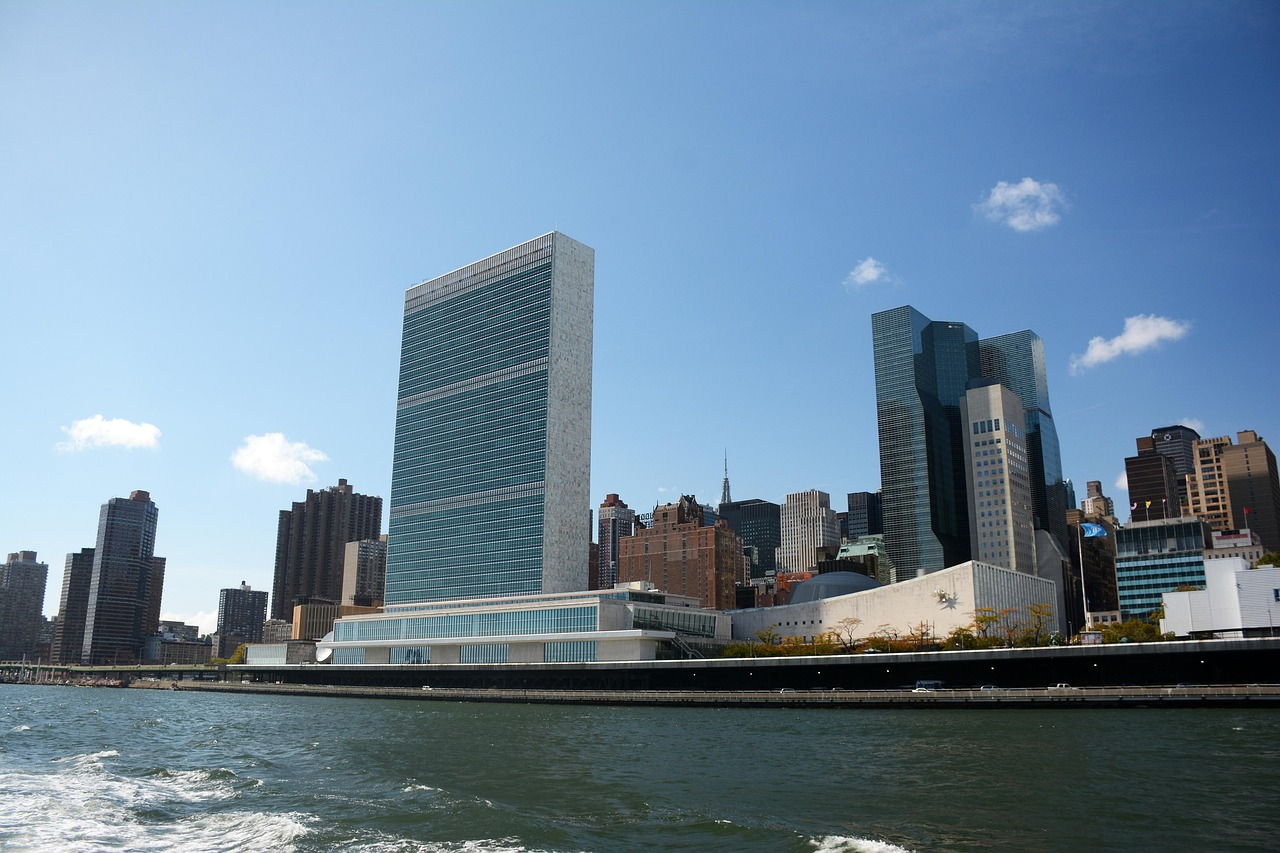
The United Nations has contributed much to human development globally. Leaders from all over the globe have thronged to the UN General Assembly’s 81st session in New York. The UNGA is not the only branch of the UN. It has six branches, including the UNSC and ECOSOC. The UN, with all its branches, has been contributing to human development globally. But it has failed to do so as desired. Moreover, how much the UN can desirably facilitate human development remains uncertain.
Human development indicates the development of human beings, the self of human beings. Human development is the realization of human potentials to the highest possible extent by surmounting animality, alongside the development of different human dimensions. Human potentials are realized through the subsequent four stages, such as consciousness, choice-making, planning, and realization. With the realization of human potentials to the highest possible extent through these successive stages, human beings turn out to be realized human beings with realized identity or identities. But conducive social, economic, political, legal, cultural, and other grounds are needed to fully realize human potentials and become fully realized human beings. Without these conducive conditions, human development is retarded.
The United Nations has facilitated various societal grounds to facilitate human development all over the world, not only in countries at peace but also in countries in conflict, including Sudan, Yemen, the DR Congo, Myanmar, and Afghanistan. The UN has prevented the occurrence of conflicts, mediated peace, helped improve educational conditions, improved laws and reduced coercive laws, improved living conditions, provided employment opportunities, and promoted economic, political, and civil rights in different countries. On the contrary, it has helped punish criminals all over the world in several ways, including reinforcing national legal systems and facilitating global police cooperation.
Various UN measures have helped hundreds of millions of people all over the world who are displaced due to wars and other reasons, famine-affected and hungry, socially deprived or disadvantaged, to be conscious of themselves and the world, make better choices of many, who otherwise could have found it difficult to do so, and make better plans and, hence, contributed to realizing potentials, eventually fostering human development globally. Without the UN, it could have been difficult to deal with various problems that hinder human development, including wars, displacements, famine, health threats, and political repression.
But the UN has failed to facilitate human development as desired on various grounds. There are many conflicts, including the Ukraine war, the Sudan war, and the Yemen war, that have led to the displacement of millions, disrupted education, and hampered or stalled economic opportunities, and brought many other negative outcomes, hindering the human development of millions all over the world by hindering or limiting consciousness, options to make choices, the making of plans, and the realization of choices. But the UN has failed to resolve conflicts on most occasions, even if the main reason for its establishment in 1945 was to ensure peace by ending conflicts.
Moreover, many are impacted by economic, social, cultural, and humanitarian problems globally due not only to wars, as noted previously, but also to other reasons. Millions of people live in poverty, and there is social marginalization, the suppression of culture, and gross violations of human rights in many countries. Though UNDP, UNESCO, MDGs, SDGs, and many other UN initiatives have helped address various challenges and improve various conditions, the UN has failed to solve these, which Article 1 clearly states, as desired. These have impacts on consciousness, making choices, developing plans, and realizing choices needed for human development.
Inherent flaws in the UN, the lack of cooperation of member states, and flawed approaches to problems are responsible for its failure. Inherent structural, political, and financial flaws, including the UNSC Veto power and the lack of effective enforcement mechanisms, along with flawed approaches like disproportionate resource allocation, the preference for top-down approaches over local needs, and political biases, have contributed much to its failure.
Moreover, there is a lack of cooperation from member states. On many grounds, including preventing conflicts, mitigating conflicts, and facilitating reasonable reforms on legal, political, and other grounds that are conducive to human development, UN member states, including powerful states, do not cooperate, leading to its failure in achieving the desirable outcomes. These put hindrances to making and improving conditions needed for human development in different nations, including nations in conflict and less developed nations.
It is definitely not possible at all to make the UN a universal administrator. There are sovereign nations that have their goals, plans, policies, and the need to flourish. Sovereignty is acknowledged in the UN Charter. Consequently, it is neither feasible nor even expected to enforce its terms on nation-states always. But the UN can still play a greater role in fostering societal conditions needed to make reasoned choices, make plans to realize choices, and realize choices all over the world.
The UN needs to address its inherent flaws, including the veto power that five countries currently exert over UN international security measures, including peace resolutions, and political bias toward nations. The UN has comparatively more success in its social, humanitarian, and economic programs than in its primary mandate of maintaining international peace and security. But its diplomatic and peace-building mechanisms can still be strengthened to prevent and mitigate conflicts, though there are geopolitical and other challenges, and contribute more to ending conflicts, which significantly hinder human development for millions globally by limiting the capabilities of realizing human potentials.
The UN needs to play its desirable role in other aspects, too, to improve various conditions for millions all over the world. For this, it is vital to improve its resource allocation and consider local needs in its initiatives, including programmatic initiatives. But cooperation from nation-states is vital to improve the capacity of the UN to contribute more and foster human development across the world.
