

Insurgencies have been on the rise in Burkina Faso over the years, leading to concerns. As per the reports of multiple sources including the BBC, insurgencies were carried out in Burkina Faso by militants a few days ago. There were also many other previous militant attacks including one of the deadliest attacks in 2024. But insurgencies have been increasing even after the 2022 military coup that ousted the elected government of President Roch Kaboré, which was also struggling to combat militant attacks. Insurgencies have killed thousands, impacted the economy, displaced hundreds of thousands and resulted in a humanitarian crisis in Burkina Faso. But —moreover— how much insurgencies will end in Burkina Faso remains uncertain.
Insurgencies in Burkina Faso have been going on for many years but these are growing and have escalated dramatically since the 2022 military coup. Many reasons including the presence of several insurgent groups including al-Qaeda and Islamic State for the Greater Sahara (ISGS), ethnic tensions and regional destabilization have been playing a vital role but they are challenging to address. Insurgencies and armed conflicts in Mali and the expansion of militant groups such as the Jama’at Nusrat al-Islam wal-Muslimin (JNIM) and ISGS from Mali to Burkina Faso have intensified militant attacks especially since 2015. Moreover, there is weak governance, limited military capacity and porous borders but they remained largely unaddressed. Consequently, rising insurgencies may not be surprising at all in Burkina Faso.
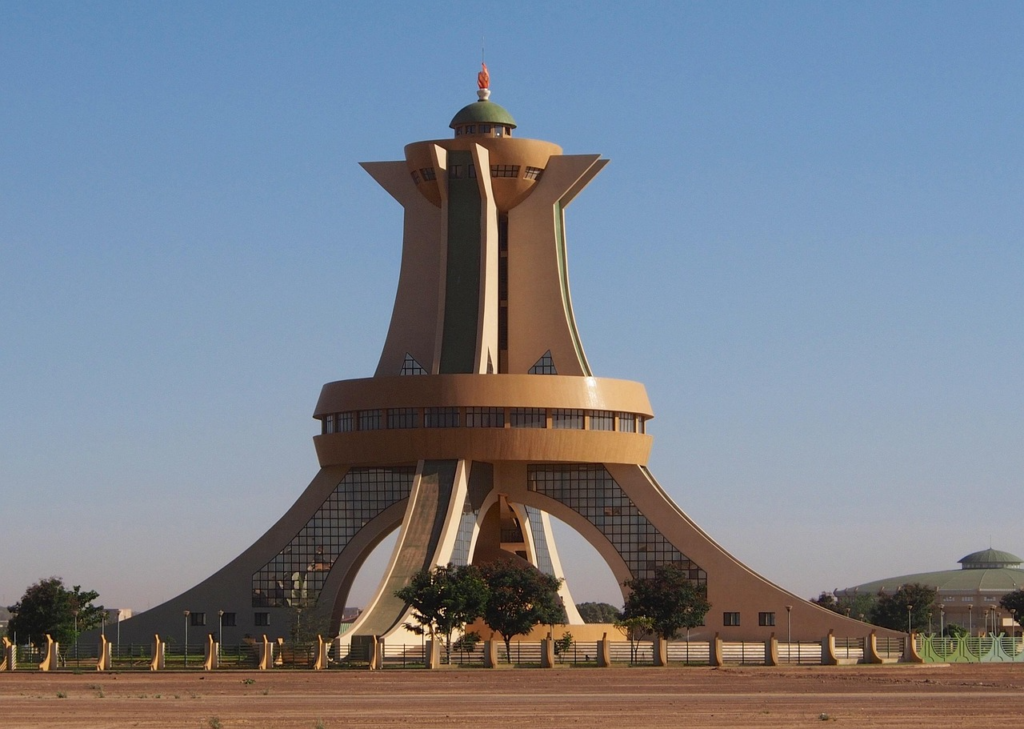
Memorial martyrs, Burkina Faso (credit: https://pixabay.com/).
But, optimistically saying, military-based and other efforts have been going on. The expansion of the Volunteers for the Defense of the Homeland (VDP), security partnerships with Russia and the formation of the Alliance of Sahel Region are some crucial measures of the Tarore government, which came to power after the second military coup in 2022 —that ousted the interim president Paul-Henri Sandaogo Damiba — in Burkina Faso. Though these counter-insurgency measures aimed at tackling growing insurgencies and led to some temporary reductions in Burkina Faso, which has been struggling after the fall of the leader Blaise Compaoré in 2014, they have not brought the desired outcomes. Rather, these measures increased casualties, fueled extremist recruitment and caused human rights abuses.
But there are various flaws in the efforts, though the ”total war” approach killed many militants, destroyed several militant bases, or dismantled militant networks in 2024-25. Over-reliance on the military-based approach and operational and strategic failures in counterinsurgent actions are notable flaws. The Burkina Faso government mainly adopted combat operations with the intention of killing militants. But Burkina Faso has not desirably taken efforts to address the root causes of insurgencies such as the limited capacity of the military, weak governance and poverty. While the military is often perceived as poorly trained and ineffective, underdeveloped, rural and northern regions are ripe for militant recruitment due to poverty.
Addressing insurgencies is vital in Burkina Faso, which has banned all political parties. But Burkina Faso needs to address its flaws in the ongoing efforts and challenges to fight insurgencies more successfully. Strengthening military capability with training and equipment and improved coordination of anti-insurgent actions are crucial. But addressing human rights concerns with the government’s counterinsurgent measures is needed. The government also needs to address other root causes including economic woes especially in the underdeveloped and northern regions to prevent many from being recruited as militants. But emphasis simultaneously needs to be given to finding talks-based solutions.
But the Traoré government also needs to restore democracy and address political concerns. A stable political government, along with a strong military, may fight insurgencies more successfully. The military coup and the establishment of military rule, which was initially justified based on the failure of the earlier governments including the elected government to combat militancy, along with the suppression of political parties and leaders, have not brought desired outcomes. The ongoing counter-insurgency approach, which lacks political engagement, has rather worsened the insurgency in Burkina Faso — and resulted in more instability.
An elected government in Burkina Faso will be helpful. Instead of the ban on political parties, the suspension of the constitution and the suppression of political leaders, the restoration of democracy and multi-party politics is vital. This will be helpful not only in improving institutions but also in fighting insurgency more effectively. But the government of Burkina Faso also needs to withdraw its ban on all political parties and hold elections for an elected government.
