

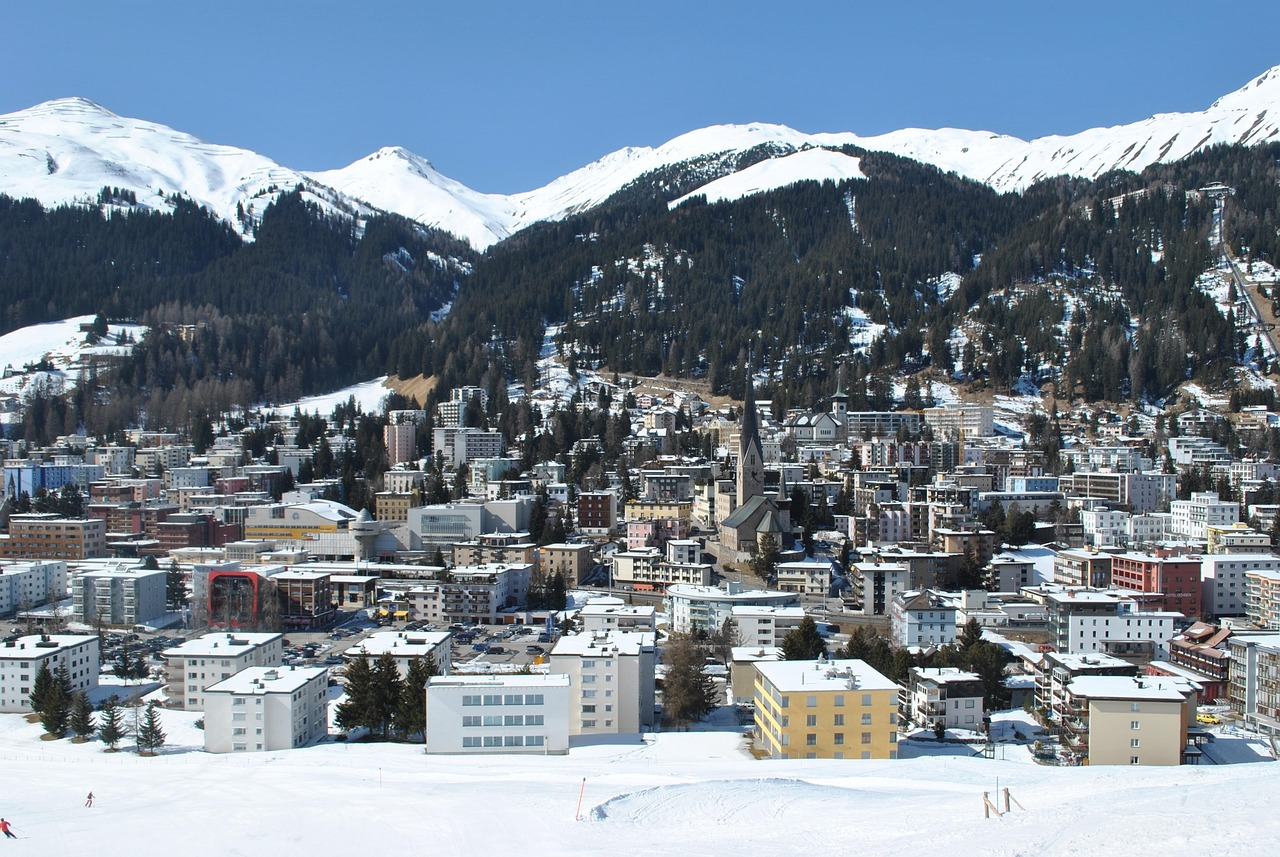
For decades, the World Economic Forum’s Davos summit has presented itself as the nerve center of global governance — a rarefied stage where political leaders, corporate magnates, technocrats, and intellectuals converge to “improve the state of the world.” In its self-imagination, Davos has served as both a mirror and a motor of the liberal international order, diagnosing crises, narrating futures, and forging elite consensus. Its authority has depended less on formal mandate than on performative legitimacy, sustained by the belief that proximity to power, expertise, and capital can substitute for democratic accountability. Yet the contemporary moment reveals a harsher truth: Davos increasingly mirrors the crisis it claims to solve, its pretension the only fiction left worth unpacking.
Despite repeated invocations of dialogue and cooperation, Davos no longer coordinates the world; it stages its disintegration. The forum’s summit is not merely another ineffectual meeting but a symptom of elite authority’s collapse amid overlapping inflection points: agentic AI destabilizing agency and authorship, global power shifting away from Western primacy, and planetary limits — climate disruption, ecological exhaustion, and mass displacement — that exceed the grammar of elite coordination. Once imagined as a cockpit of global steering, Davos now resembles a ceremonial ruin: impressive, ritualized, and disconnected from the forces reshaping the world.
The signifier that best captures this collapse is derived from Samuel Huntington’s formulation of Davos Man, a figure that in our era has morphed into what might be called Devos Man. Huntington introduced Davos Man not as a sociological caricature but as a civilizational symptom: the post–Cold War Western elite subject, affluent and normatively assured, convinced that prosperity, faith, and civilization formed a natural continuum and that elite coordination would yield global convergence. The term has been interpreted to describe an elite with attenuated national loyalty and cosmopolitan orientation that views sovereign boundaries as barriers to global integration. Davos Man mistook Western power for ethical universality. His confidence lay not only in markets or institutions but in a deeper moral certainty—the belief that history itself had aligned legitimacy with canonical Western authority and that globalization would universalize this alignment.
Davos Man thus embodied the hubris of the “end of history” moment: the assumption that liberal capitalism had resolved ideological contestation and that governance could be reduced to management. What mattered was not contestation but calibration, not politics but expertise. Elite consensus was imagined as a proxy for universal interest, and dissent was treated as either irrational or residual.
Conversely, Devos Man is not the architect of this collapse but its afterimage — the subject who survives an order after its organizing principles have already expired. He persists by ritualizing dialogue, aestheticizing restraint, and mistaking procedural continuity for legitimacy. Davos, in this sense, is no longer a site of governance but of memorialization: a carefully choreographed performance of authority after authority has lost its binding force. The world is not fragmenting because consensus has failed; it is doing so because consensus has become a substitute for politics. Until elite institutions relinquish the fantasy that fluency can replicate obligation and coordination can replace contestation, Davos will remain what it has become — a summit not of the future, but of the past rehearsing its own relevance.
The historical conditions that once made Davos Man plausible have passed. Liberal capitalism no longer appears unassailable; Western centrality is eroding both economically and normatively; and technological progress can no longer be folded into linear narratives of control. Agentic AI unsettles the foundations of labor, creativity, and responsibility. Geopolitical power diffuses unevenly across regions and actors unwilling to defer to Western leadership. Planetary crises expose the limits of national sovereignty and market-based solutions alike. These conditions demand epistemic humility, a planetary ethos, and governance grounded in shared vulnerability. Devos Man offers none of these. His response to uncertainty is not adaptation but deferral.
Instead, structural crises are reframed as cultural antagonisms. Shared vulnerabilities are moralized into civilizational difference. AI becomes a rival to be outpaced rather than a governance problem to be collectively regulated. Climate collapse is recoded as an investment opportunity rather than a political reckoning with consumption, inequality, and growth. Planetary limits are imagined as negotiable constraints rather than hard boundaries. Devos Man remains coherent only by insisting on categories — market rationality, civilizational hierarchy, elite stewardship — that no longer organize realist

Credit: https://pixabay.com/.
Huntington warned that civilizational arrogance would provoke resistance abroad. What he did not fully anticipate was that the same arrogance would obstruct adaptation at home. Devos Man does not merely misread others; he incapacitates his own institutions. The danger today is not that this figure is obsolete, but that he continues to structure elite behavior in a world that has become incoherent under his terms. This is the deeper irony signaled by the title of this essay. Devos Man was once a warning projected outward. His homecoming marks the return of civilizational confidence as internal constraint. What once organized dominance now produces paralysis. The phrase “comes home to roost” names not moral retribution but conceptual exhaustion — the return of a worldview to a present it can no longer master.
The Davos debacle lies not in any single scandal but in the Forum’s growing incapacity to mediate a world that no longer believes in elite stewardship or technocratic consensus. Davos stages fragmentation without synthesis, dialogue without obligation, and power without legitimacy. This condition is starkly illuminated by the renewed articulation of US interest in Greenland as a strategic and economic asset, and by the international reactions that followed. In a highly controversial speech at the 2026 gathering, the US president reiterated his push to acquire Greenland — an autonomous territory of Denmark — asserting strategic necessity while claiming he would not use force. What might once have been dismissed as eccentricity now crystallizes a deeper degradation of geopolitical seriousness within the Atlantic world.
The revival of interest in Greenland reduces sovereignty to transaction and alliance politics to leverage. Framed as a strategic necessity, it treats territory as an asset and partnership as a bargaining chip. For much of the Global South, such gestures do not provoke astonishment but weary confirmation: the Global North increasingly appears erratic, coercive, and strategically unserious. What is revealed is not merely unilateralism but a hollowing of restraint — the erosion of the very norms Western institutions claim to defend.
The implications for NATO are significant. Greenland is a semi-autonomous territory within the Kingdom of Denmark, itself a NATO member. Treating it as an object of acquisition is not diplomatic indiscretion but a challenge to the alliance’s normative foundations. NATO rests on mutual recognition of sovereignty, restraint among members, and the presumption that internal asymmetries will not be exploited. Undermining these assumptions weakens not only trust but deterrence itself, converting collective security into conditional loyalty. The head of NATO underscored the need for Arctic security cooperation in response to shifting threat perceptions at the forum.
European responses — measured and cautious — reflect deeper unease. If the alliance’s leading power can instrumentalize the sovereignty of an ally, what remains of collective security guarantees? The episode crystallizes anxieties already circulating within European strategic discourse: that NATO’s formal commitments persist while its behavioral credibility erodes under the volatility of US domestic politics. Concerns about transatlantic relations and unpredictability have been amplified by European leaders stressing unity and defense norms in the wake of the Greenland dispute. Credibility, once lost incrementally, cannot be restored ceremonially.
This rupture arrives amid accumulating Atlantic tensions over defense spending, China strategy, Ukraine fatigue, industrial policy, and trade weaponization. The Greenland episode does not merely exacerbate these fractures; it delegitimizes NATO’s moral grammar. The alliance’s claims to uphold sovereignty abroad ring hollow when sovereignty appears negotiable within. Normative inconsistency becomes strategic vulnerability.
Davos, rather than containing this rupture, amplifies it. The World Economic Forum’s traditional role — smoothing political volatility through elite consensus — falters in a world defined by overt power politics and revived territorial ambition. Its language of dialogue presumes a consensus that no longer exists. What remains is narrative management without strategic imagination, reassurance without authority. Although global economic leaders at Davos continued to signal commitment to cooperation and growth, they did so against the backdrop of these tensions. The erosion of seriousness extends beyond NATO. It corrodes the credibility of the Global North as a whole. Claims to moral authority as guardians of international law weaken when revisionism is practiced internally. The legitimacy loss is quiet but cumulative, visible less in dramatic rupture than in growing indifference.
This crisis is compounded by elite fragmentation. Davos once assumed a shared commitment to open markets and liberal institutions. Today, financiers hedge against instability, industrialists demand protection, technology leaders resist regulation, and policymakers invoke sovereignty. These are not surface disagreements but structural conflicts over capitalism’s future — conflicts Davos can neither resolve nor openly stage.
Public skepticism deepens the fracture. Davos increasingly appears as governance without accountability: deliberation insulated from consequence. Inequality remains its most glaring contradiction. Even as panels warn of social fragmentation, the Davos summit stages exclusion through fortified perimeters and selective access. This is not merely an optics problem but a structural impasse: a forum beholden to capital is ill-equipped to envision its regulation.
Climate change exposes similar limits. Davos excels at climate rhetoric yet frames sthe crisis as risk management rather than political transformation. AI discussions oscillate between utopia and dystopia while avoiding democratic control. Ethical abstraction substitutes for political struggle, and voluntary coordination displaces binding obligation.
Alternative coordination is now happening outside Davos. In the Global South and among middle powers, governance is increasingly conducted through regional institutions, bilateral arrangements, and issue-specific coalitions — spaces that lack Davos’s spectacle but prioritize food security, infrastructure, and sovereignty. These are not anti-cooperative; they are post-illusion, accepting that benevolent hegemony has ended and governance will be plural and contested.
Davos has become a Broadway production: polished, reassuring, and largely severed from real-world stakes. Governance now unfolds offstage — in “off-Broadway” arenas where scripts are improvised, and consequences are real. The 2026 summit was not a rehearsal for leadership but a ritual of self-affirmation. The Devos Man ethos — dialogue without obligation and consensus without consequence — plays convincingly to the hall while crises are negotiated elsewhere, revealing elite stewardship less as governance than as performance.
As Davos Man comes home to roost, Devos Man confronts the residue of his own certainties. Recalibration no longer means renewed consensus but the exposure of its failure. Dissensus is not a malfunction to be managed but the only remaining source of legitimacy. Authority now rests not in fluency or ritual dialogue but in enforceable restraint — binding limits on power, profit, and unilateral action borne first by the powerful. Davos must either translate dialogue into obligation or accept its fate as a ceremony. The era of elite stewardship has closed; what follows is reckoning under conditions of consequence.
DISCLAIMER: The views expressed are those of the author(s) and do not necessarily reflect the views or official position of the Magazine and its editorial team. The views published are the sole responsibility of the author(s).
