

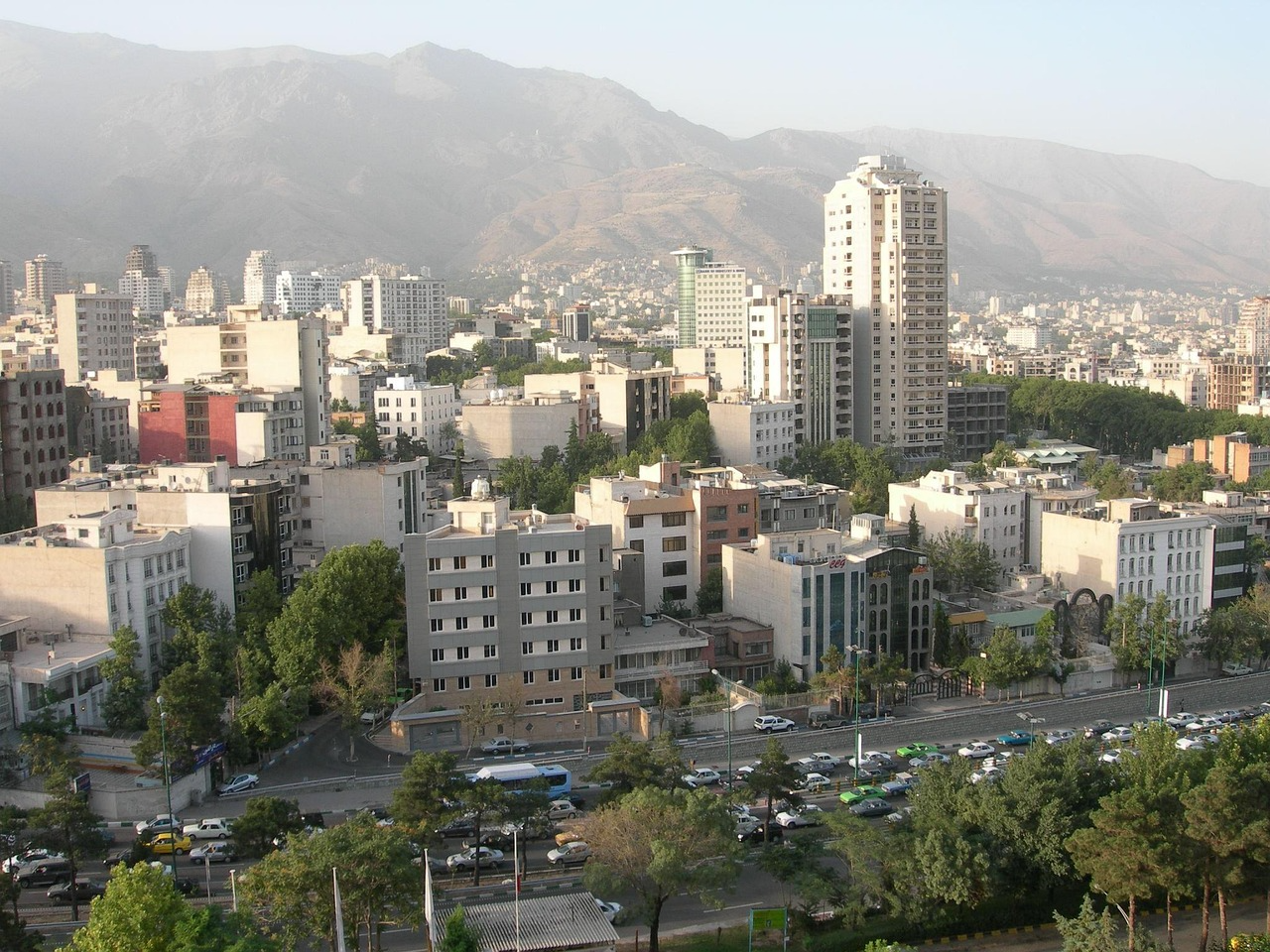
Regime change in Iran has been frequently talked about. The latest anti-government movement across Iran, which began after the rise in the currency value, has also resurfaced the issue of regime change in Iran. Many participants in the movements have demanded regime change in Tehran. Many in Iran have believed the possibility of regime change due to the scale of the protest movement and external threats involved in it, at a time when the Iranian regime has become somewhat weakened due to military campaigns of Israel and the US in recent months. Regime change probably seems far away — at least for now — though the issue still remains.
The regime change has been sought by both international and local actors. There is a mix of internal and geopolitical reasons for seeking regime change in Iran. A deep-seated internal discontent, geopolitical rivalries, and security threats are some of the vital reasons. Regime change has been an issue of international politics since the Islamic Revolution in 1979, which ousted then Western-favored Mohammad Reza Shah Pahlavi. Though there are separate international efforts against the Iranian regime, there is sometimes a direct linkage between international actions and internal efforts for regime change. But recent nationwide protests that highlight deep public discontent, due to diminished economic conditions, a lack of effective efforts to address grievances and other reasons, have received support from international actors.
At the international level, the United States and Israel are at the forefront of regime change in Iran. They have pursued the Iranian regime change through various ways since the 1979 revolution, which led to the creation of the Islamic Republic of Iran (which was previously the Imperial State of Persia), rendered a theocratic state where religious leadership, headed by Ayatollah Ruhollah Khomeini, replaced secular rule. Regime change efforts have evolved from containment to hybrid warfare involving sanctions, covert operations, support for dissidents and the recent direct military pressure against the regime. Last year’s military pressure mainly focused on Iran’s nuclear program, leading to direct Israeli strikes and increased US involvement and its strikes on Iran’s nuclear sites.
Though the United States and Israel generally agree that regime change in Iran is desirable to end its nuclear ambitions and regional interference, they sought it rather inconsistently and differ significantly on approaches, timing, methods, and the level of tolerance. Because of its national interests in the region, Iran’s growing military capability including nuclear programs and an intention to support the reginal proxies, along with several other causes, the US has historically wavered between diplomatic pressure and coercive action — often fearing the consequences of a power vacuum in Tehran — and most intended to compel the Iranian regime to alter its behavior, rather than direct military engagement with an aim to overthrow it.
But Israel views a nuclear-armed Iran as an existential threat to its survival. Israel generally promotes more direct, aggressive and immediate approaches and actions such as direct military strikes on nuclear sites, nuclear scientists and the Iranian leadership including the military and political leadership to force regime change, regardless of the potential for a regional war and impacts. But pertinently saying, despite the desire of Israel for a change in the Iranian regime, there is debate within Israeli intelligence regarding whether to actively use force for the collapse of the regime. While some prefer to use force against the regime, others prefer to hope for the best while preparing for the worst.
But internally, regime change efforts have gradually intensified. These efforts within Iran have gradually unfolded from scattered and ideological protests after the beginning of the Islamic Republic to broad-based and nationwide anti-government movements, leading to systemic and difficult challenges especially in the 2020s. The shift is due to several causes including internal economic mismanagement, social repression, and the erosion of the regime’s legitimacy. Major anti-government movements are the 2009 Green Movement protests, the 2022 Woman, Life and Freedom movement and the ongoing 2025-06 movement. The focus of the movements has transitioned from the demand of reforms within the theocratic system that was built after the 1979 revolution to a widely shared desire for the outright collapse of it.
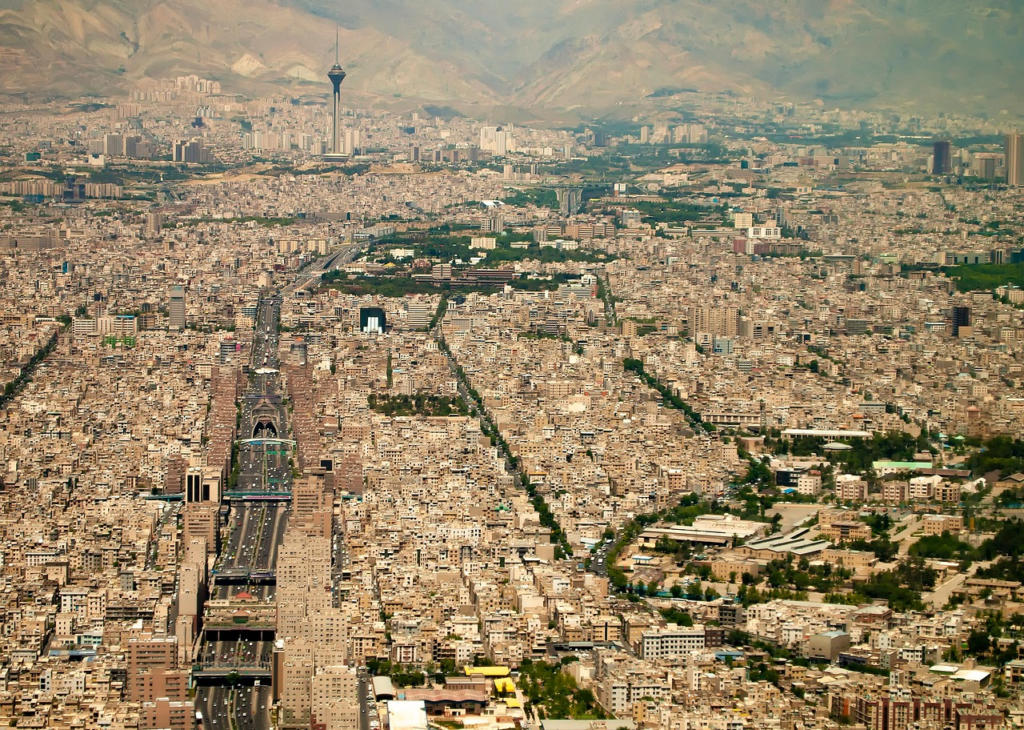
Tehran, Iran (Credit: https://pixabay.com/).
Different parties, along with general people, including the National Council of Resistance of Iran (NCRI), the Solidarity for a Secular Democratic Republic in Iran (Hamgami) and the Democratic Party of Iranian Kurdistan (PDKI) are internal actors and involved in movements for regime change. The organizations differ in their ideologies and approaches but what is common is that they aim to change the Iranian regime and ensure a more democratic Iran. Along with parties or groups, many opposition figures or individuals including Prince Reza Pahlavi, the son of Reza Shah Pahlavi (overthrown in the 1979 Iranian Revolution) who positioned himself as a secular and democratic leader, have been promoting regime change, supporting protestors and calling for international support to weaken the current regime.
But international and internal efforts have so far failed to change the Iranian theocratic regime. Various reasons including internal resilience of the regime, strong security arrangements, a lack of a unified opposition, strategic miscalculations by international actors and the unintended outcomes of external pressure have hindered regime change in Iran. Pertinently saying, the resilience of the Iranian regime mainly comes from the deep institutional structure of Iran, the use of coercive power for security forces including the Islamic Revolutionary Guard Corps (IRGC) and the regime’s control over the state apparatus that enables Iran to withstand its economic crises, coercive western sanctions, and mass movements.
Despite intense economic sanctions, military strikes by Israel and internal movements, Iran has maintained its stronghold on power till the date through a variety of ways including its sophisticated security apparatus and the creation of a “resistance economy”. The resistance economy has long been designed to withstand external pressure such as sanctions against the regime. But the absence of unified opposition to the Iranian regime and a single leader in protest movements has probably led to a limited effectiveness of internal efforts against a determined state. The opposition, which involves various ethnic groups, nationalists, and leftists and seeks a transition toward a secular democratic system that separates religion from government, has consequently so far remained weak against the regime.
But different international attempts to bring about regime change in Iran — especially driven by US-led “maximum pressure” sanctions, international isolation, and direct external military confrontation — have caused profound and often detrimental impacts on Iran in a variety of ways. These have led to deeper economic impacts, cycles of violence, segmented opposition and increased repression in Iran over the years, along with significant instability in the region. But the ordinary people especially the middle class and vulnerable groups have suffered the most from the external efforts especially western sanctions against Iran.
The impacts of the regime change efforts include severe economic distress, rising living costs and profound consequences for the livelihood of ordinary people in Iran. But Iran encountered the most severe effects during 2012–2019 and the 2024–2025 economic crisis. The efforts that have been intended to weaken the regime have resulted in a significant contraction of the economy. They reduced oil exports by 60–80 percent from Iran and caused severe impacts on its GDP. But western sanctions reduced the middle class annually by an average of 17 percentage points especially during 2012–2019, resulting in widespread poverty in Iran and disrupting support through social safety nets to poor people.
International efforts to bring regime change have, moreover, triggered intensified state coercion in Iran. The Regime has always responded with a violent and coordinated crackdown by security forces; consequently, there have been high death tolls, arbitrary arrests and detention. Many Iranians, especially the youth and the middle class, who view that the theocratic system needs to be changed and have supported the movements, have often become the targets of the repression of the decades-long regime. While several thousand people were killed in the 2022 anti-government movement, it has turned out to be around 10000 in the latest movement.
Geopolitical rivalries and regime change efforts are not surprising at all. These are present in other regions. Geopolitical rivalries of the US and Israel with Iran will probably continue due to differing national interests, religious and ideological differences and other reasons. Consequently, international efforts for regime change will continue in the future too. Besides, growing state repression and coercion including killings and arbitrary detention and increased desire among people for democratic governance, along with public discontent over economic distress and corruption, will drive internal motivation for regime change efforts in Iran.
But given that the efforts of regime change and rivalries of the United States and Israel with Iran have led the Iranian people to suffer the most, measures are needed to reduce their impacts. Even if there is a regime change or not in Iran, driven by international and/or domestic efforts, this is vital. Both the external parties and the government of Iran need to revise their approaches. Western sanctions need to consider their adverse impacts on ordinary people. Those sanctions that have functioned more as a tool to impose severe economic pain in Iran and have rather impacted the lives of ordinary people need to be revised.
But international efforts for regime change in Iran especially sanctions have often backfired — mostly resulting in the strengthening of Iran’s domestic power rather than collapse. Though these have led to some achievements including causing economic downturns, bringing Iran to the negotiating table and putting some sorts of pressure on the government of Iran, sanctions have not compelled a fundamental change in behavior or achieved stated policy goals, reduced defense budgets and uniformly crippled the wealthy; rather, they have created opportunities for those with close ties to the IRGC and the Supreme Leader’s office. Consequently, international efforts have rather been paradoxically benefiting a small, well-connected and wealthy elite.
Given the extent of rivalries, the possibility of imposing further sanctions on Iran remains in the future. But, importantly, it is difficult to be certain about whether further sanctions can change the regime in Iran. Further sanctions can create more and long-term economic instability that may further weaken the government. But they are not a guarantee for regime collapse on their own. Rather, further and abrupt sanctions may only increase the suffering of the people in economic terms and increase state repression against those who seek regime change. But instead of abrupt sanctions, a talks-based approach may help reduce rivalries and tensions.
But the government of Iran needs to refrain from brutality against dissent and address reasoned concerns. It is vital to reduce economic impacts and improve economic conditions, secure civil liberties, address strict state restrictions, and ensure freedom of expression. Iran also needs to refrain from arbitrary arrests and detention merely for its national security concerns and uphold the rights of the people. But instead of creating force, talks are desirable and can be more helpful.
