

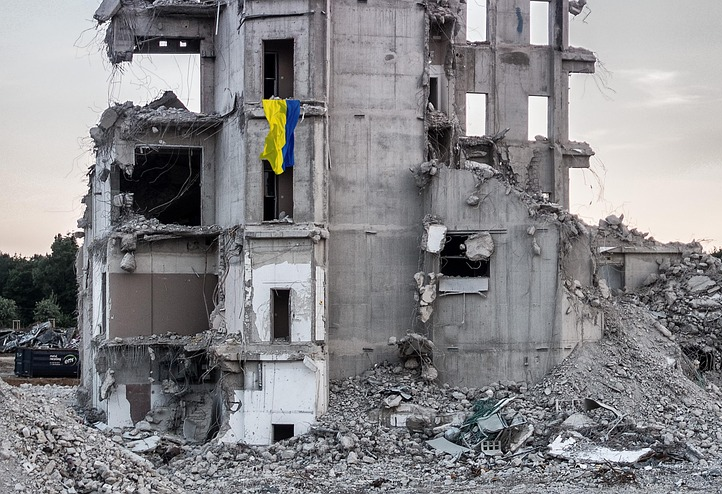
The paradox of contemporary geopolitics is that Russia — weakened by sanctions, demographic decline, and a grinding war it cannot decisively win, much to its own mounting chagrin — has nevertheless emerged as one of the most effective provocateurs of American primacy. Putin’s Russia succeeds not through the glow of conclusive victory but through the grind of effective attrition, converting setbacks into leverage rather than strength into success. In this sense, Russia is winning by losing: its failures expose the fragility of American hegemony, the exhaustion of Western political will, and the erosion of the epistemic foundations that once sustained US global leadership.
It is a reminder, too, of the inversion that now shapes global politics. Washington insists it is playing multidimensional chess, but increasingly finds itself trapped in the reactive, linear logic of checkers. Russia, with reduced bargaining pieces, restricted maneuvering options, and scarce political and military resources, is playing a deeper positional game. In a world where one can win by losing, lose by winning, or do both at once, Moscow’s strength lies less in outcomes than in its ability to unsettle the predictabilities of a clockwork universe.
Yet the conflict did not need to be adversarial to this degree. As Jeffrey D. Sachs has argued, a post–Cold War order grounded in cooperation, reconstruction, and pluriversal norms could have preserved a diplomatic space now nearly unreachable. Instead, American foreign policy repeatedly cast Russia — and later China and Islamic actors (as noted by Samuel Huntington in his The Clash of Civilization and the Remaking of World Order) — as structural “others,” reinforcing confrontational cycles that prematurely foreclosed alternative trajectories (Foreign Affairs). This habitual framing magnified misperceptions, rendering Russia’s pushback far more existential than necessary and anchoring the conflict in a tragic spiral of mutual escalation.
By conventional metrics, the war in Ukraine is catastrophic for Russia: tens of thousands dead, heavy losses in armor, a contracting economy, and an unsustainable drain on the country’s exchequer. But the contagion is mutual: the stalemate that signifies Russian weakness simultaneously erodes Western arsenals, strains Western economies they can ill afford, intensifies transatlantic fractures, and exposes the limits of American coercive power. Washington can supply money and weapons, but it cannot manufacture a decisive outcome. Each month of stalemate reinforces the perception that the United States can no longer guarantee victory — even against an ostensibly inferior adversary. Thus, Russia “wins” by failing: its inability to conclude the war becomes evidence of America’s inability to shape it. As the conflict drags on, the costs borne by Russia generate broader systemic costs for the West, slowly converting tactical defeats into strategic advantage.
Economic and institutional sanctions have had limited success in fully crippling the Russian war-machine or economy; despite export restrictions and financial penalties, Russia’s adjustment — continued energy exports, trade with non-Western partners, and domestic resilience — has blunted the intended effect. Meanwhile, prolonged war drains Western resources, political cohesion, and public will. But far from being an erratic autocrat improvising from one blunder to the next, Putin follows a logic that appears irrational only when filtered through Western expectations of how a rational actor ought to behave. There is a method in Putin’s madness — or rather, Putin’s method appears to be madness only to the Western narrative.
What Western analysts often mistake for strategic incoherence is, in fact, a calibrated willingness to incur extraordinary costs in order to impose even greater systemic loss on adversaries. As scholars such as Mark Galeotti note, Russian strategy often treats suffering as a strategic resource, and what appears reckless is frequently a deliberate form of political and military endurance aimed at exhausting the West’s capacity to respond. Russian strategic culture has long privileged endurance over efficiency, sacrifice over speed, and positional advantage over tactical neatness. Moscow has historically accepted staggering losses if doing so exhausts a stronger opponent and widens fractures within an opposing coalition. Its heavy casualties, economic contraction, and diplomatic isolation are not merely the price of miscalculation; they are instruments of a broader strategy of strategic insolvency — turning weaknesses into weapons and costs into coercive leverage.
From this vantage, what looks like self-harm is often calibrated self-expenditure — a wager that Russia can outlast Western patience even if it cannot outfight Western power. Scholars, including Fiona Hill and Stephen Kotkin, note that Russia deliberately converts material weakness into positional advantage, exploiting Western expectations of rationality. Dmitri Trenin emphasizes that this strategic patience aligns with a long-term vision of multipolarity, while Lilia Shevtsova and Timothy Frye highlight the Kremlin’s ability to weaponize internal and external asymmetries. John Mearsheimer’s structural realism further clarifies that Russia’s asymmetric approach is rational within its systemic constraints.
Across the Global South, Russia’s endurance — however brutal — carries significant symbolic weight. Many states no longer interpret the conflict as a binary fight between aggression and defense, but as a test of whether Washington still commands global compliance. The survival of the Russian economy despite massive sanctions undermines the presumed universality of American moral authority. Neutrality itself becomes a geopolitical act, if not tact, for Africa, Latin America, and the Middle East — an implicit rejection of the US-led order. Russia does not seek admiration; it thrives on ambivalence. Its refusal to collapse under Western punishment exposes the limits of US capacity to enforce norms and underscores the increasingly provincial nature of American universalism.
Through BRICS and bilateral arrangements with India and China, Russia has accelerated a move away from the US dollar toward local currencies — a process often termed “de-dollarization.” This does not supplant the dollar outright, even as Mearsheimer contends that the threshold may have already been crossed, but it chips away at its monopoly, gradually decoupling financial power from geopolitical dominance,
Russia has become particularly adept at exploiting American domestic vulnerabilities: polarized media ecosystems, contested elections, declining institutional legitimacy, and hyper-partisanship. This strategy does not aim to persuade ideologically but to disrupt epistemically. Russian cyber intrusions, influence operations, and opportunistic propaganda thrive in these cracks. They accelerate division rather than create it. A declining power need not defeat a stronger adversary; it must only unsettle its confidence. Russia’s own weakness magnifies this asymmetry.
Unable to compete symmetrically with the United States, Russia embraces asymmetric methods: cyber-warfare, energy leverage, private military contractors, covert destabilization, and hybrid operations. Weakness expands its range of options rather than limiting it. It is known as the strength of strategic insolvency. Moreover, the deeper Russian challenge is epistemic. Moscow does not seek to offer a universal ideology that rivals liberalism; rather, it aims to delegitimize American exceptionalism. In tacit partnership with China, Iran, North Korea, and a widening constellation of non-Western actors, Russia erodes the discursive foundations that once underpinned US authority (Brookings Analysis).
The Ukraine conflict forces Washington into expensive commitments without clear off-ramps. The United States will continue to maintain NATO unity, deter China, contain Iran, and navigate profound domestic dysfunction. Russia, by contrast, will merely endure. Emerging peace frameworks — however tentative — already reflect Moscow’s influence: tacit recognition of altered territorial realities, reconsideration of neutrality, and a shift from “victory” to conflict management.
Intriguingly, the war may end under American mediation, but on terms that Russia has strategically pre-shaped. Russia suffered heavy losses on the battlefield, yet molds the diplomatic horizon, seeking through negotiation the territorial gains in Ukraine that its military could not secure, or could find it difficult to secure. Meanwhile, America retains immense power yet struggles to convert it into coherent results. Russia wins by enduring; America loses by overreaching.
Priorities must shift toward cooperation, reconstruction, and pluriversal norms that prevent today’s disputes from hardening into durable resentments. For Washington, this means confronting its long-standing habit of manufacturing permanent “others” — a reflex that generates avoidable confrontations and deepens the very grievances that make future crises more likely. Military, economic, informational, and epistemic dynamics now function as an interlinked system in which Russian attrition, sanctions evasion, and financial realignment illuminate vulnerabilities the West has either minimized or misunderstood.
A credible strategic recalibration begins with provincializing the West: acknowledging that it no longer defines the terms of global legitimacy and that its self-appointed universality has itself become a catalyst for friction. The authority once concentrated in Euro-Atlantic institutions has dispersed, while states across the Global South — including those claiming neutrality or strategic ambiguity — assert their interpretive autonomy. In this context, nonalignment is not equivocation; it is a way to preserve sovereignty in a world where binding oneself to any dominant bloc risks inheriting its conflicts and resentments.
Cooperative reconstruction, pluriversal norm-setting, and recognition of genuinely distributed power are therefore pragmatic necessities, not rhetorical ideals. The task is not to resurrect Western hegemony — an effort that would merely reinscribe hierarchies and intensify grievance politics — but to adapt to its waning influence without inflaming old antagonisms. A viable multipolar order must allow those historically placed at the periphery to exercise agency, and those once at the center to accept a more modest role, without rekindling the humiliations and backlashes that have long driven instability. Only then can geopolitical competition be disentangled from the cycles of injury and retaliation that continue to destabilize the global landscape.
DISCLAIMER: The views expressed are those of the authors and do not necessarily reflect the official policy or position of the Magazine and its editorial team. Views published are the sole responsibility of the author(s).
