

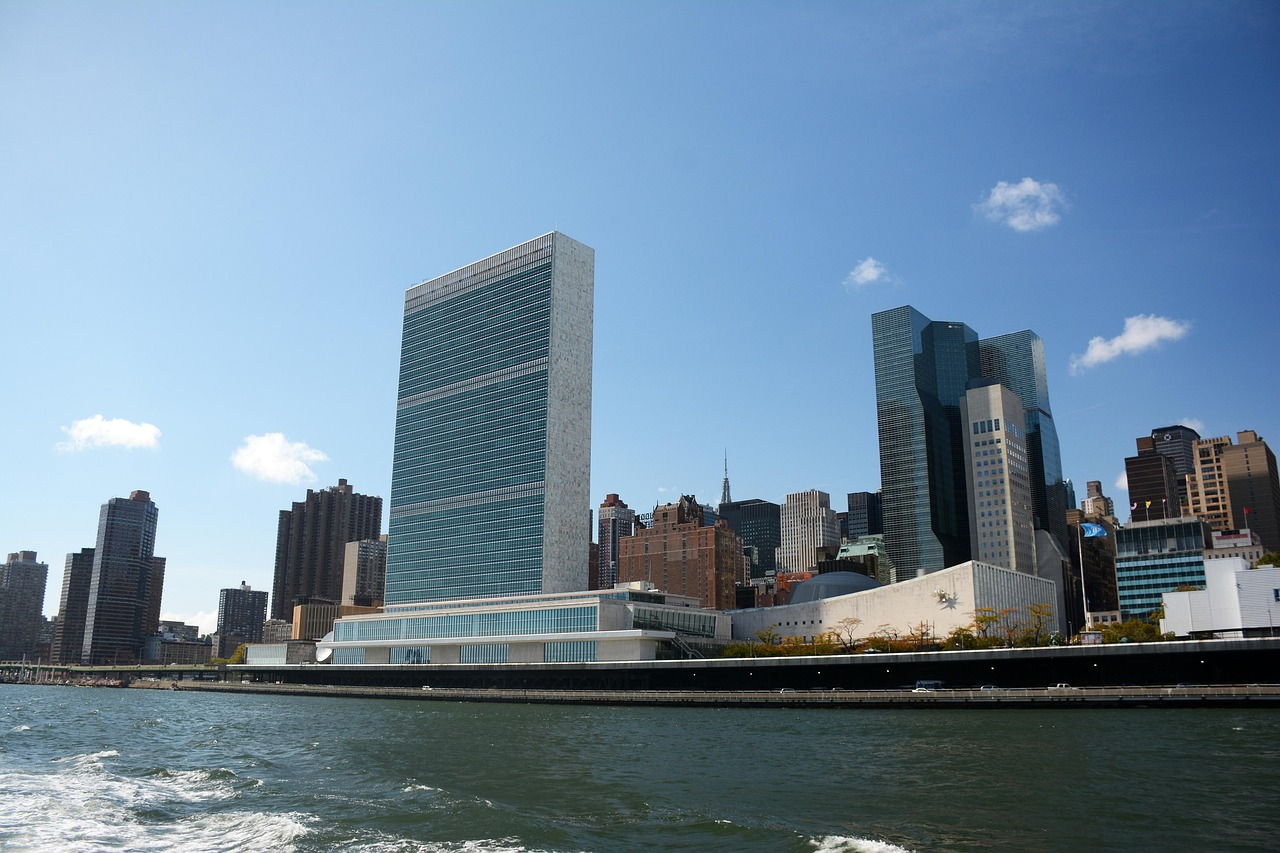
The general debate of the 81st session of the United Nations General Assembly (UNGA), which concluded in New York in September, showed how far the institution has drifted from its founding purpose. States continue to invoke the rules-based order while increasingly bypassing the body that embodies it. The evidence from the debate points towards the fragmented outcome. The more consequential question is what role the United Nations will retain if that trajectory holds.
As in previous years, the Assembly was a venue for leaders to defend and denounce positions on wars already under way, from Washington’s conflict with Iran and Russia’s war in Ukraine to Israel’s campaign in Gaza, which a UN commission of inquiry (the Independent International Commission of Inquiry) has found to constitute genocide, rather than to prevent the next conflict. In his final address to the 81st Assembly as Secretary-General in September, António Guterres framed the central question as whether power will be governed by law or by force. He also cautioned that the emerging multipolar order could develop along fragmented and transactional lines instead of within a framework of shared rules.
The general debate’s opening exchange in the 81st UNGA session came between Washington and Tehran. US President Trump offered Iran a choice: a deal after November’s American midterms or, in his words, to “annihilate the Islamic Republic.” He was addressing a country the United States has been fighting for seven months. Iran’s president, Masoud Pezeshkian, responded a day later. He held up photographs of children killed in the US-Iran conflict and insisted that Tehran has never sought a nuclear weapon, at a session where the UN Secretary-General urged all states to advance their non-proliferation commitments. An offer of terms tied to one party’s domestic political calendar and delivered from an international platform suggests that the substantive bargaining is likely to happen elsewhere.
Ukraine occupied a separate axis of the same debate. President Zelensky told the Assembly that Russia’s revenues “must remain a target” and described President Putin as “patient zero” of a war that continues to spread. President Putin skipped the session again, as he has in past years, and sent Foreign Minister Sergei Lavrov, who called for a new security architecture in Eurasia. In both cases, speakers addressed audiences, and the Assembly offered no mechanism for resolving differences between the parties.
The week’s most visually striking moment came during Prime Minister Netanyahu’s address, when roughly 77 delegations were either absent or walked out as he took the podium. The walkout came a day after Mahmoud Abbas addressed the Assembly by video. Washington had denied him a visa to attend in person, a decision that bears on the host state’s obligations toward delegations accredited to the United Nations. Netanyahu described the departing delegates as “moral cowards.” Set against the recent wave of Western recognition of Palestinian statehood, the episode suggests that Palestinian claims now draw a broader coalition of states and growing diplomatic momentum. That support is voiced in the Assembly, however, which has little power to change outcomes elsewhere.
Pakistan’s address restated positions Islamabad has held consistently. Prime Minister Shehbaz Sharif told the Assembly that any Indian attempt to stop, impede or divert Pakistan’s share of the Indus waters would be treated as an act of war. He framed the warning as a defensive red line around a resource question that bears directly on the livelihoods of millions. In strategic terms, the statement signals an escalation threshold in legal language and extends a water-sharing dispute into the deterrence relationship between two nuclear-armed states. Sharif also reiterated Pakistan’s invocation of Article 51 of the UN Charter, citing what Islamabad calls external aggression during last year’s crisis, and credited President Trump’s intervention, not a multilateral mechanism, with helping avert a wider conflict.
Sharif also reaffirmed Kashmir’s centrality to Pakistan’s foreign policy outlook, and pointed to the newly signed Pakistan-Saudi-Türkiye defence arrangement as evidence of deepening regional security cooperation. The speech reflected continuity at a moment when Islamabad is also seeking to present itself as a stabilizing regional actor, citing its quiet role in facilitating dialogue between Washington and Tehran. In a week dominated by speeches narrating active conflict, Pakistan’s address stood out for framing its concerns in legal terms.
More revealing than the conflicts was the UN’s own standing: an institution attacked from two opposing directions at once. President Trump criticized what he termed “globalist” bureaucracy while citing a 15 percent budget cut and the elimination of more than 4,000 positions as evidence of reform. Argentina’s Javier Milei went further, accusing the institution of failing at the one task it was created to perform: guaranteeing collective security. Taken together, these positions describe an organization that is bloated, unaccountable and ineffective, and they point towards a narrower one.
The opposing critique came from Kenya’s William Ruto, who noted that Africa accounts for nearly a quarter of UN membership yet holds no permanent seat on the Security Council. Spain’s Pedro Sánchez echoed the complaint, calling for broader regional representation and abolition of the veto. Both argue that the UN’s structure remains frozen in 1945, with the same five states holding disproportionate power, and both point towards a more representative organization.
The UN Secretary-General’s own address sat between these two critiques. António Guterres rejected the case for a weaker organization, stating that the world “does not need a weaker United Nations,” while describing the absence of permanent African seats as “unjust and indefensible.” His UN80 reform program seeks to answer both of the critics by making the organization more responsive and more disciplined in its use of resources. Neither path, however, addresses the central problem: the states with the greatest influence over outcomes have limited incentive to route them through the organization, and Security Council reform requires the consent of the permanent members whose position it would alter.
The debate leaves the role of the United Nations unsettled. States still turn to the UN Charter for the vocabulary of legitimacy, but the bargaining that determines outcomes increasingly takes place between capitals, and the session offered little evidence of the networked multipolarity that Guterres described. Security Council reform is desirable but it would require the consent of the permanent members whose position it would alter, so the more likely course is a UN consolidated around functional roles while security bargaining remains bilateral.
The test over the coming year is whether understandings between Washington and its rivals return to the UN for endorsement or are concluded entirely outside it. Yet, it is desirable and needed to reduce the chance of unilateral and force-based settlement of wars through bilateral bargains that can unduly favor one party over the other and increase the chance of short-term peace resolution.
DISCLAIMER: Views expressed are those of the author(s) and do not necessarily reflect the official policy or position of the Magazine, or its editorial team. Views published are the sole responsibility of the author(s).
