

Presidents are mostly rendered the head of state in a democracy. Though the prime minister holds the executive power in a parliamentary democracy — the most common form of democracy all over the world — the presidency is still the topmost position by protocol. The presidency is consequently a desirable position in democracies including parliamentary democracies and many desire to be the president of his/her country. But the election process of the president is not human development-friendly, especially in a parliamentary democracy. In a parliamentary democracy, compared to presidential and semi-presidential democracies, there is a limited scope for running for the presidency and there are compromises in human potentials.
Human development potential is compromised in a parliamentary democracy in several ways. The limited scope of running for the presidency in the parliamentary form of democracy is a crucial compromise of human potentials. The presidential candidates are mostly nominated by political parties and the voters of the presidential elections are the elected members of the parliament, though there are some exceptions such as Ireland, Iceland and Slovakia where they are elected directly by the people’s vote. Anyone outside the political party affiliation mostly does not have the scope of running for the presidency, though there are some exceptions including Ireland, Check Republic, Slovakia, Slovenia and Singapore, where independents can run for the presidency depending on some conditions including a certain number of signature (for instance, in Check Republic) or support from a certain number of the elected representatives (for instance, in Ireland).
Laws and customs play a vital role in human development and realizing human potentials. It is pertinent to say that the term ‘human development’ indicates the development of a human being or the self of the human being to the highest possible extent. Human development occurs through the realization of human potentials to do and to be in political and other terms, developing all of the dimensions and surmounting animality. The laws and customs of the state provide the scope of pursuing one’s reasoned choice or goal and — hence — help realize the human potentials of everyone to be and to do. Alternatively saying, laws and customs facilitate human development, which is both an individualistic and societal process, by providing the grounds of realizing human potentials to do and to be.
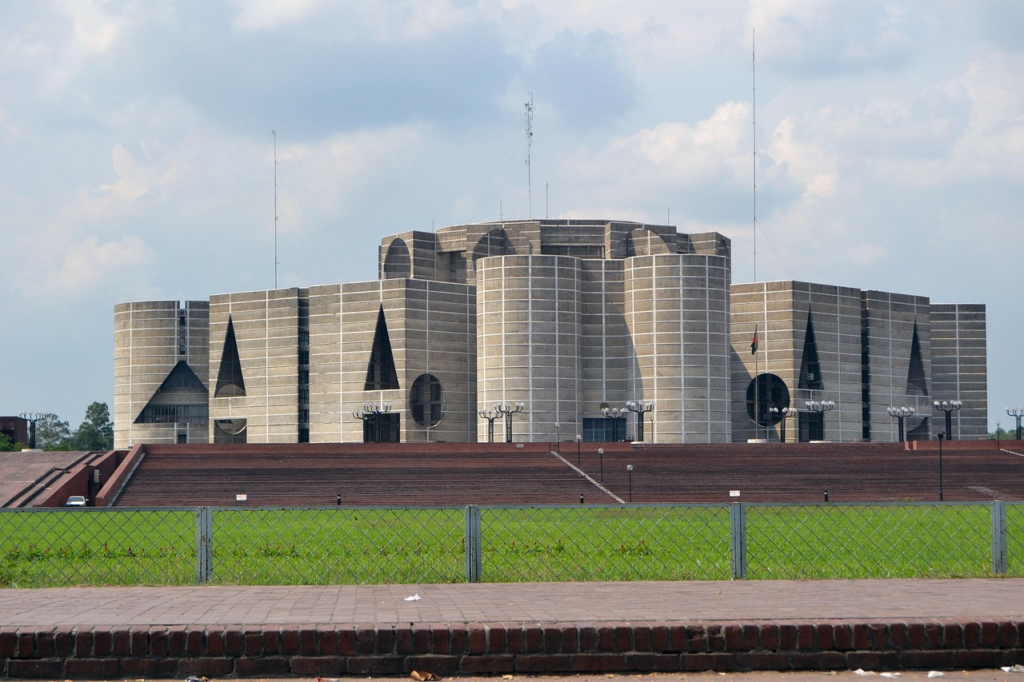
Parliament, Bangladesh (credit: https://pixabay.com/).
But the extant presidential election system in the parliamentary democracy mostly does not provide the scope to those who do not belong to major political parties or do not belong to any political party to run for the presidency and realize their potential of becoming a president, even if it may be a reasoned choice or goal to be. Alternatively saying, even if many have the potential to be the president, they are not eligible to run for the presidency in many parliamentary democracies mainly due to the limits posed by the laws and customs. Consequently, the existing system in most parliamentary democracies mostly provides a scope of realizing human potentials of a few selected individuals, rather than others especially independents.
Once elected, the president does not have any significant and day-to-day executive power, though there are a few exceptions including Ireland, where he has slightly more discretionary or reserve power. There is a lack of scope for the expansion of the president’s human capabilities or potentials due to structural and legal limitations. Consequently, the president cannot be an active agent of change. He/she rather acts as a nominal head of state — which is almost similar to a constitutional monarch — and becomes a passive being. The president’s acts mostly depend on the advice of the prime minister and the cabinet. Most common responsibilities include accrediting ambassadors, receiving foreign dignitaries and signing bills passed in the parliament.
Moreover, due to very limited power and nomination by the ruling party, the president in a parliamentary democracy signs the bills and acts as the party wants. Consequently, the president cannot employ judgment on most occasions, leading to further compromises in human potentials in a parliamentary democracy. If the elected government makes any draconian or black laws that protect its unreasoned interests and unreasonably punish and suppress citizens for realizing its ill-motivated goals, the elected president has no option to prevent these. Consequently, the president in a parliamentary democracy sometimes sacrifices, willingly or unwillingly, his/her human potential of doing good for the citizens and, hence, surmounting animality.
All forms of democracies such as parliamentary democracy, presidential democracy and semi-presidential democracy have importance and relevance. But several measures may help improve the scope of the realization of human development potential especially in the elections of the president in a parliamentary democracy. In addition to party-nominated candidates, independent candidates should be given the opportunity to run for the presidency. This is possible, even if the prime minister holds the executive power in a parliamentary democracy. Direct elections of the president by people’s vote can be more suitable for many parliamentary democracies, provide an increased chance of winning the elections by the independent candidates and give a mandate to act as an active agent.
But the president in a parliamentary democracy holds very limited power. This leads to an imbalance of power in the government — even if there are other balancing mechanisms such as the legislative and the judiciary. The imbalance of power, in turn, leads to the abuse of power by the Prime Minister and the government in many democracies. The lack of a strong and independent check by the president plays a vital role in making the prime minister and the political government less accountable, even if other causes are also responsible. This is relevant especially where there is a lack of rule of law and transparency and accountability.
Providing a bit more power to the president is vital in a parliamentary democracy. This will help realize the potential of doing something better for the state by the president. Moreover, this will help make a better balance by curbing the unchecked authority of the prime minister, and improve politics in many countries with unicameral parliamentary democracy. This is more pertinent where there is a lack of rule of law and an ill-functioning executive branch.
