

In Bangladesh, the demand for a unified, independent, and effective media commission to ensure the development of free media and independent broadcasting has existed for a long time. This is a crucial demand that was also reflected in the report of the Media Reform Commission. However, despite having passed since the submission of that report, the interim government remained entirely indifferent to implementing its recommendations. Instead, at the very final stage of its tenure, the interim government had published two draft ordinances — titled the National Media Commission Ordinance and the Broadcasting Commission Ordinance — that aimed at establishing two new government bodies.
Over this move, Transparency International Bangladesh (TIB) has expressed deep disappointment and frustration. TIB believes that the preparation of these two draft ordinances — contrary to public expectations and the recommendations of the Media Reform Commission, with the apparent objective of imposing greater control over the media sector — and seeking public opinions within a very short time (only three days), constitutes a parting mockery by the interim government. At the same time, the TIB identifies this move as yet another example of the interim government’s continuous practice of secrecy across nearly all areas from the outset, as well as the reform-opposing and obstructive actions carried out by certain sections of the government under the guise of state reform.
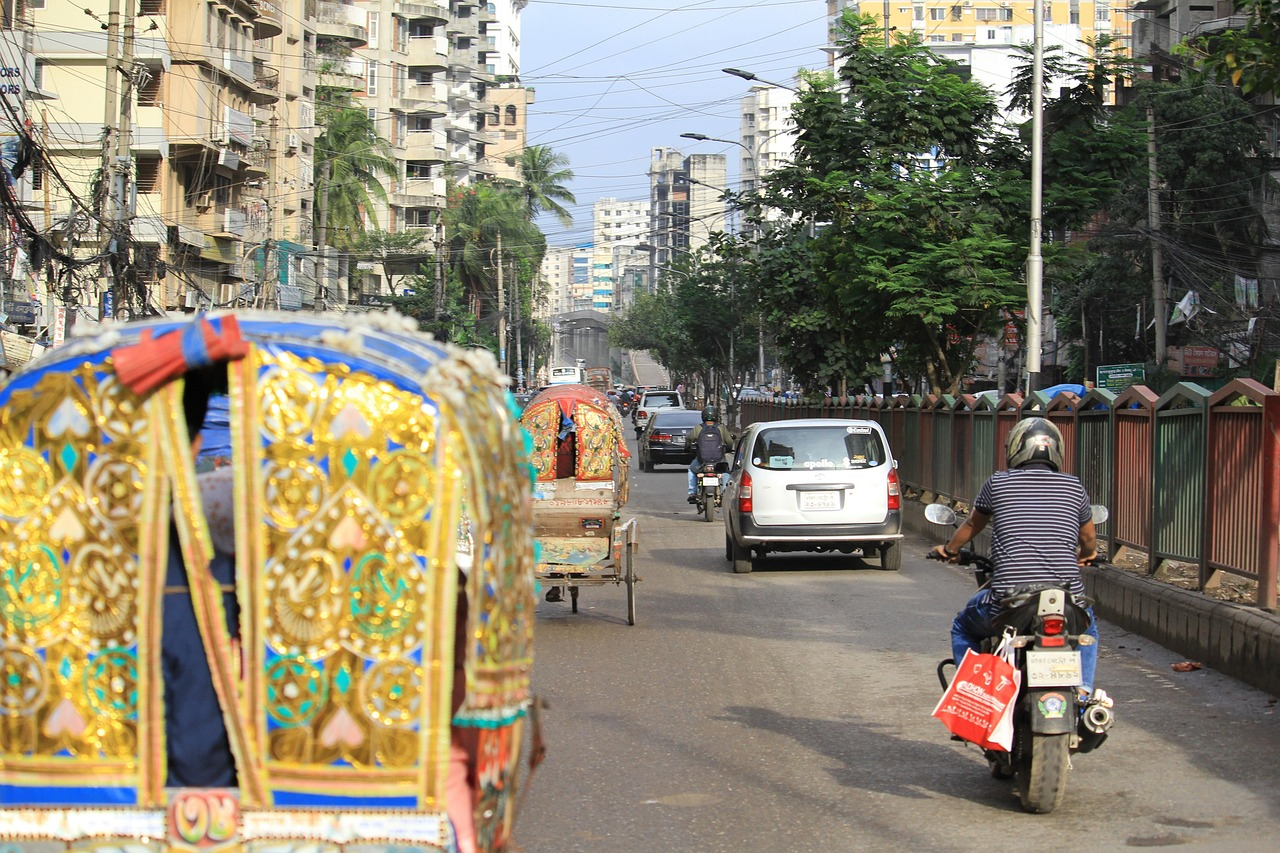
Dhaka, Bangladesh (credit: https://pixabay.com/).
In a statement (issued on 31 January, 2025), Dr. Iftekharuzzaman, the Executive Director of the TIB, said, “In both cases, the proposed structure and status of the commissions, the rank and authority of the commissioners, and the administrative and financial arrangements are designed to establish two institutions that are entirely under government control — particularly under bureaucratic authority. This represents a mockery of the interim government’s commitment to the development of free media and independent broadcasting… At the final stage of its tenure, these two proposed drafts reflect the same adversarial stance by the government toward expectations of media freedom.”
With a reference to the numerous limitations of the existing Press Council of Bangladesh and the absence of any comparable institutional framework for the broadcast media, the Executive Director of the TIB noted that the Media Reform Commission — based on research and consultations with relevant stakeholders — recommended the establishment of a unified, independent Media Commission free from government control. But the government has not shown the slightest consideration for this recommendation.
Instead of pursuing the short-sighted initiative of establishing two new regulatory government bodies for the interrelated media and broadcasting sectors, Dr. Zaman has proposed the formation of a single, unified, and independent media commission that can operate outside government authority. At the same time, the Executive Director of TIB has urged and expressed expectations toward the political parties participating in the 13th parliamentary election — many of whom have themselves been victims of the past government’s control over free media and independent broadcasting in Bangladesh and have made strong commitments in their respective election manifestos and campaigns — that, following the formation of the new parliament, they will immediately proceed through a participatory process.
Respecting their own experiences, commitments, and public expectations, political parties should establish a genuinely independent and impartial unified media commission. Such a commission would be capable of ensuring the highest professional standards and creating an enabling ground for the development of the free media and independent broadcasting in the country.
NB: Dhaka Opinion Magazine does not send its editorial team members to cover press conferences, conferences, seminars, workshops, or any other similar events. It selectively publishes Opinion Roundup, Conference Overview, Convention Overview, and Author’s Letter when opinion-based press releases, conference proceedings, or other similar materials are submitted or sent to the magazine. But these are subject to editing before publication based on the policy of the magazine.
DISCLAIMER: The views expressed are those of the authors and do not necessarily reflect the official views or position of the Magazine and its editorial team. Views published are the sole responsibility of the author(s).
