

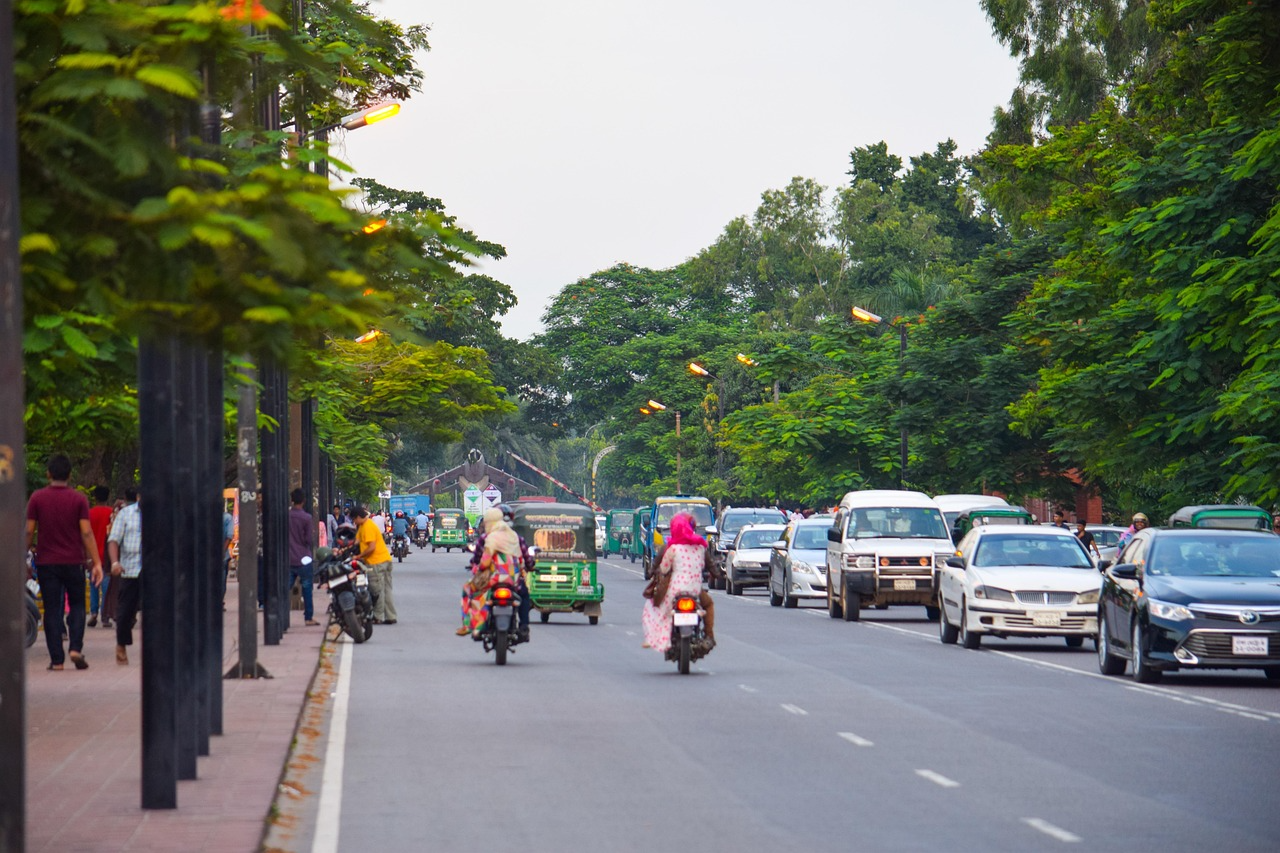
Bangladesh, though once hailed as one of the fastest economies in Asia, is currently witnessing a significant slowdown in economic terms. After a decade of continuous improvement, Bangladesh, now shows clear indications of economic strain. Its industrial sector is struggling with various problems including a decline in orders, hesitation in investment, and high production costs, which are causing many sectors to slow down or shut down entirely, particularly in the garments and manufacturing industry. This slow growth has been fueled by various causes including recent political unrest. Job losses and reduced income are becoming increasingly visible and affecting millions of people who are dependent on these industries.
Bangladesh’s export revenue is largely derived from the ready-made clothing sector, though several other sectors are also contributing. Eighty percent of all exports come from the RMG sector, the industry that is rendered the foundation of the economy of Bangladesh. As per the report of the BGMEA, export earnings from this sector were increasing steadily and reached 52 billion USD in FY 2021-22. Export earnings later dropped to 44 billion dollars in FY 2022-23, though they recovered somewhat in 2024 and reached 48 billion US dollars. Many garment factories have been forced to close because of declining global demand, political unrest and labor unrest. During the labor unrest, which took place between September and October 2024, Bangladesh’s garment industry lost its production worth almost USD 400 million. Moreover, other Bangladesh’s manufacturing industries like leather, plastic goods and jute are facing similar challenges.
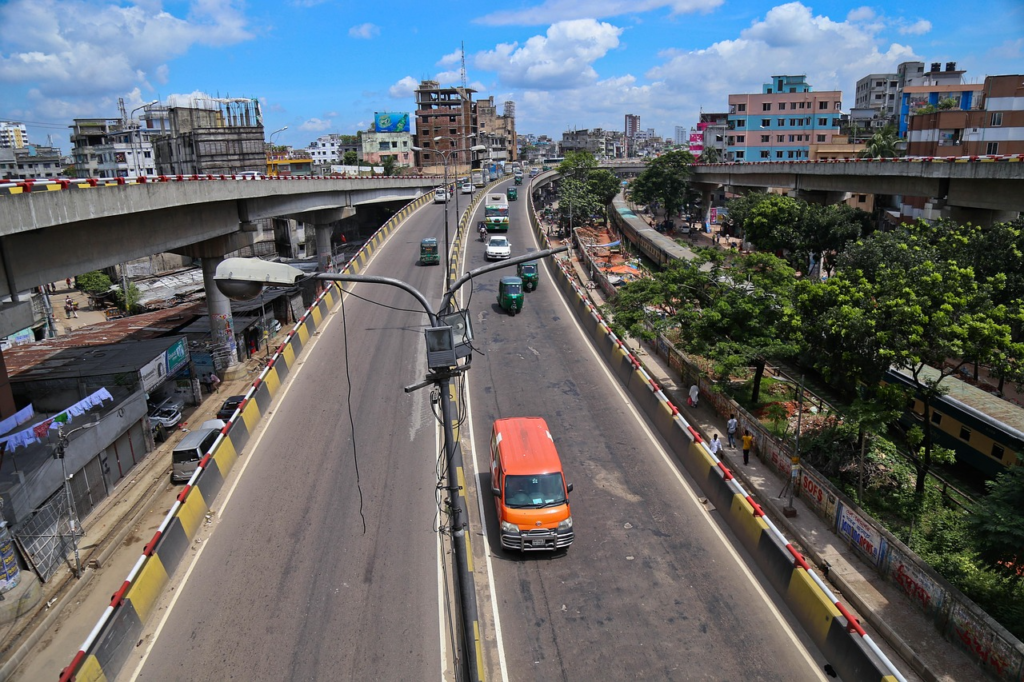
Dhaka, Bangladesh (credit: https://pixabay.com/).
But the slowdown of industries has many impacts. It has significantly impacted Bangladesh’s economy. The GDP of Bangladesh has ceased to grow as fast as it did in previous years. As per the report of the World Bank, the GPD growth rate was 4.2 percent in 2024 and 4 percent in 2025, the lowest rate in the last decade, with the exception to 2020, while it was 6.9 percent in 2021, 7.1 percent in 2022 and 5.8 percent in 2023. Moreover, the inflation rate of Bangladesh is on the rise over the years, especially from 7.7 percent in 2022 to 10.5 percent in 2024, though annual inflation rate somewhat dropped subsequently and is 8.58 percent in February 2026. But due to these, household budgets are still under pressure for many.
But industrial workers, especially in the manufacturing and RMG sectors, are largely affected by economic downturn. Thousands of industry workers are unemployed, driven by excessive job losses and factory closures. Pertinently saying, around 62,000 industry workers lost jobs in early 2025 due to the permanent closure of 95 factories in Gazipur, Narayanganj, Savar, and Narshingdi. Moreover, many are facing pay reductions and payment delays and there is increased reliance on forced overtime. There is a degradation of working conditions for many as the owners of many industries, especially the RMG industries, have been struggling especially since 2024 with rising production costs, plummeting prices, and reduced orders from buyers.
But these economic disruptions extend beyond the worker, affecting society at a large scale. This have led to a cost-of-living crisis for many in Bangladesh, where poverty is still a major cause of concern, with more than 25 percent of the people living below the poverty line. High inflation, political instability and sluggish economic growth has eroded the purchasing power of citizens. Moreover, rising unemployment and reduced income have not only led to growing poverty and financial insecurity but also can create long term social and economic challenges for the country.
A complete recovery and continued financial prosperity is vital. But these require political stability, policy changes, and the restoration of investor confidence. Quick policy interventions like energy subsidies and fiscal support and robust regulatory frameworks are vital to prevent further declines in exports and the loss of employment in Bangladesh. But Bangladesh’s current economic slowdown highlights the need for a decisive action plan not only to protect the industries but also to stabilize the overall economy. But focus also needs to be given to addressing the impacts of industry stagnation and economic slowdown on industry workers and others.
The consequences of the economic slowdown highlight the significance of the situation. But coordinated efforts from the government, industry stakeholders and international partners can help secure both short term stability and long term growth. If these are left unaddressed, these could lead to an industrial stagnation for a long, with a possibility of further impacts. The government needs to put emphasis on political stability in the days ahead. This will foster economic recovery and progress.
DISCLAIMER: The views expressed are those of the authors and do not necessarily reflect the official policy or position of the Magazine. Views published are the sole responsibility of the author(s).
