

In the past years, Bangladesh has witnessed a series of disastrous fires that have left the whole nation speechless. Fire incidents have led to a trail of destruction and raised serious questions about public safety. A few months ago, fire incidents took place at a garment factory in Mirpur, Dhaka, the capital city of Bangladesh, the cargo complex of Hazrat Shahjalal International Airport, followed by the Narayanganj chemical warehouse fire and the Korail slum fire. A rise in factory, warehouse and residential fires is turning into a daily headline for our nation. Factories and residents have become death traps for the people in Bangladesh.
The recent fire incidents in Bangladesh are alarming not just because of their scale but also for their frequency. But these incidents are no longer just isolated accidents. According to the Fire Service and Civil Defence (FSCD), Bangladesh faced a staggering 26,659 fire incidents in 2024 alone. Fires reflect a nationwide systematic increase in their frequency and Bangladesh now sees an average of 73 fire incidents every single day. That means almost every 20 minutes, a home, a factory or a warehouse is getting into fires in the country. The deadly fires in Bangladesh have already reached a frustrating stage and raise a painful question: how many more fires shall we endure before a meaningful reform finally starts?
Fires lead to tragic consequences. The death toll has increased year on year alongside the number of incidents. Because of fire incidents, 98 people died in 2022, the death toll rose to 102 in the next year and it reached 140 in the following year. The economic toll of fire incidents is also huge. In the last year, Bangladesh suffered 446 crore BDT due to the incidents, the amount was 372 crore BDT in 2023 and it was 310 crore BDT in 2022. It is quite a big deal for a struggling economy like Bangladesh. These make it clear that Bangladesh is facing a nationwide fire crisis that threatens people’s lives, property and the economy.
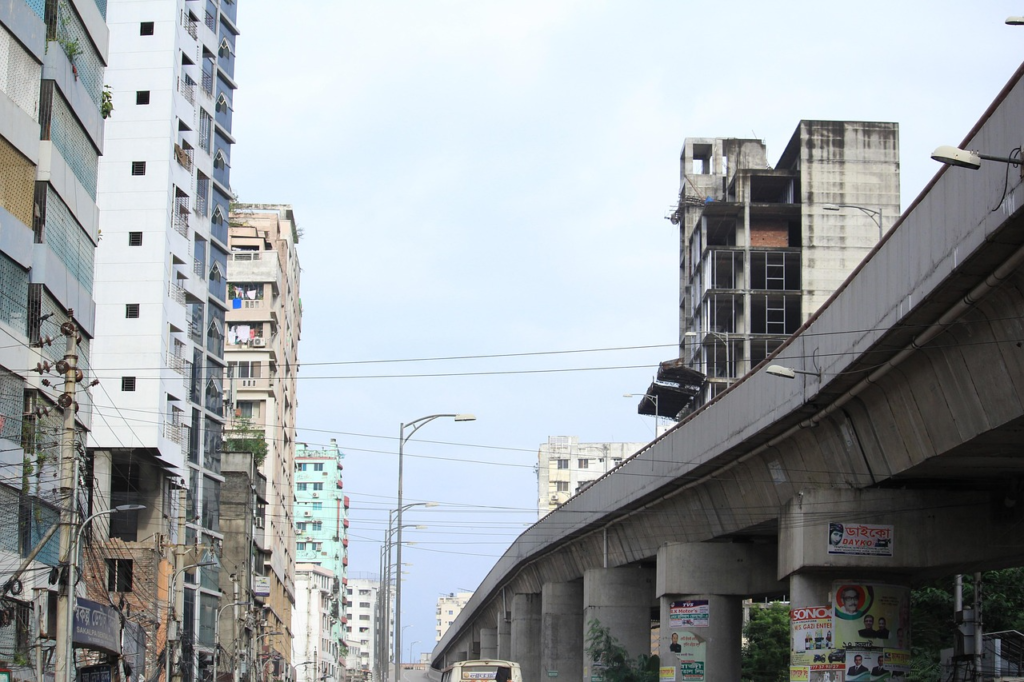
Dhaka, Bangladesh (credit: https://pixabay.com/).
Bangladesh’s fire crisis is not taking place in a single sector. It is breaking out across a range of zones like factories, slums, airports and even residential areas. Unplanned development, overcrowding, a lack of fire protection, a lack of regulation and electrical dangers are some of the major causes for these frequent fire outbreaks. Industrial areas like Gazipur, Tongi and Narayanganj and parts of Dhaka are most fragile. In these areas, garment factories and small manufacturing units are located dangerously close to chemical warehouses, increasing the chance of fire incidents.
Many of the factories lack the proper fire safety measures. They have flammable materials and electrical faults and a lack of safety equipment. Around two-fifths of fire incidents in 2022 were caused by electrical short circuits. As indicated in a research investigation, flammable materials are not properly stored in 37.14 percent of the garment factories, facilitating fire incidents in Bangladesh. Besides, the Department of Fire Service and Civil Defence of the government of Bangladesh has confirmed that 90 percent of the factories do not have firefighting equipment and safe exit routes in Narayanganj, increasing the damage and death toll of a fire outbreak.
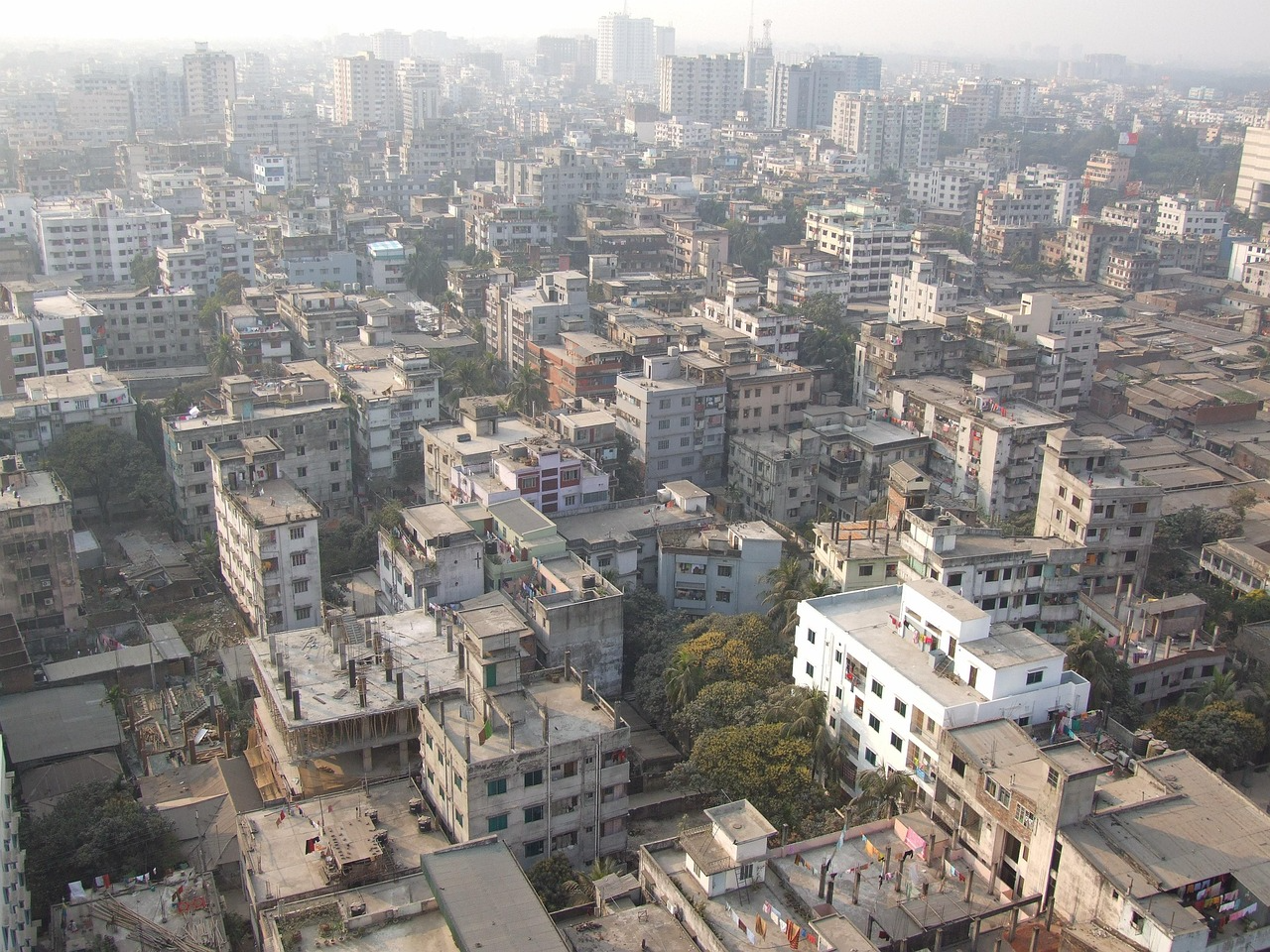
Urban residential areas are facing similar threats. The densely populated slums or congested neighborhoods, especially in Dhaka are ticking time bombs. Most of the areas are built with low-quality materials, tangled electrical wiring and lack proper planning. In many locations including old Dhaka, there are chemical warehouses in residential buildings or just beside the residential blocks, posing a high level of danger. Additionally, the recent incident at the Dhaka Airport cargo complex indicates the gaps in safety protocols, even in the most secure areas.
Fires leave behind a trail of destruction, along with deaths. Fires bring disastrous consequences to those who are alive, impact their life and livelihood and destroy their hope. The Korail Slum Fire alone destroyed almost 1500 shacks and left dwellers homeless, though no casualties were found. People living in the slums were not able to save their belongings. But many do not get compensation or financial assistance after fire incidents. Even if financial compensation or discretionary humanitarian and financial assistance is sometimes given through government aid, corporate responsibility, insurance payouts and legal action, they are scant and unable to recover the losses incurred in fire incidents.
Provided that proper measures are absent, the chance of fires will keep increasing. Planned actions are required to reduce fire incidents in the country. But, pessimistically saying, the governments of Bangladesh do not implement recommendations made after the investigation of fire incidents. Consequently, there is little or no notable change except for the governments’ repeated assurances, media coverage on different fire incidents and the sufferings of different groups of people in fires. To address fires, it is vital to implement recommendations.
The government needs to put emphasis on enforcing fire safety regulations and upgrading electrical and building standards to reduce the frequency of such incidents. Besides, Bangladesh has to ensure safe storage of flammable materials with effective monitoring and mandatory fire insurance, especially for factories. The emergency response team shall be quick and well trained to reduce the impacts of fire incidents. But political commitment is vital to successfully fight the menace including politically linked sabotage.
DISCLAIMER: The views expressed are those of the authors and do not necessarily reflect the official policy or position of the Magazine. Views published are the sole responsibility of the author(s).
