

Since the end of World War II, the United States has presented itself — and cultivated a modest popular perception — as the self-styled arbiter of the global order, a nation that underwrites a rules-based system of diplomacy, trade, and security, even as the invocation of American exceptionalism — with its ideological throwback to Manifest Destiny — routinely exempts it from the very norms it claims to defend. Through the exercise of this postwar dominance, often described as Pax Americana, the United States has projected itself as guarantor of global stability while shaping international norms to align with its strategic and economic interests.
The recent, flagrant US intervention in Venezuela exemplifies this pattern of exceptionalism, asserting power beyond the bounds of international law in a breach condemned by the United Nations Human Rights Office as a violation of sovereignty and a stark departure from the carefully curated soft-power image. This intervention sits within a longer historical arc of regime-change operations across the Global South — practices that Noam Chomsky has argued are not aberrations but structural logics of US foreign policy, repeatedly deterring or destabilizing democratic processes when they conflict with strategic or economic interests.
At the same time, as Anne Applebaum has cautioned in The Atlantic, the projection of American power abroad often reflects a political habit of privileging external dominance even as domestic institutions, civic trust, and social cohesion face deepening strain — a pattern that risks weakening the very foundations of American democracy at home. Seen in this light, the logic of power mutates from arbiter into arch-aggressor, exposing how the veneer of moral authority and international stewardship collapses under the weight of strategic ambition and unilateral action. What was once framed as measured diplomacy now reads as overt coercion, with repercussions that extend far beyond Caracas — eroding confidence in US commitment to international norms and risking cascading effects on regional security, global stability, and the credibility of international law.
On January 3, 2026, the United States launched a large-scale military operation in Venezuela, striking targets around Caracas and announcing the capture and removal of President Nicolás Maduro and his wife. US officials framed the intervention as a counter-narcotics operation and a legal effort to bring drug-trafficking suspects to US courts, invoking frameworks associated with the United Nations Office on Drugs and Crime (UNODC). The Trump administration claims authority to oversee Venezuelan governance and encourage American energy firms to invest in rebuilding the nation’s oil sector; President Trump has already announced that Venezuela would turn over 30–50 million barrels of oil to the United States at market price. Members of the United Nations Security Council — including states traditionally aligned with Washington — condemned the abduction of Venezuela’s president as a violation of international norms, calling for an immediate halt to hostilities and a return to diplomatic resolution.
The Venezuelan government, now led by a new interim executive installed with implicit US support, responded forcefully. Caracas declared a state of emergency and vowed to pursue domestic collaborators involved in the assault, signaling heightened internal repression and potential further instability. Officials denounced the intervention as a naked violation of sovereignty and the principles associated with the United Nations Charter, framing the operation as coercion designed to assert external control over a sovereign nation.
International reactions underscore the broader geopolitical ramifications. Regional leaders, including the presidents of Brazil and Colombia, condemned the strikes and regime removal, warning that unilateral military intervention threatens the sovereignty of Latin American nations and undermines established norms of non-interference. Neighboring states are preparing for potential refugee flows and cross-border instability, while humanitarian agencies such as the United Nations High Commissioner for Refugees (UNHCR) brace for displacement pressures. Major powers beyond the Western Hemisphere, including China and Russia, issued stark condemnations, framing the operation as illegal aggression. Smaller states such as Cuba and North Korea echoed these concerns, portraying the intervention as evidence of US expansionism and a dangerous precedent for global security.
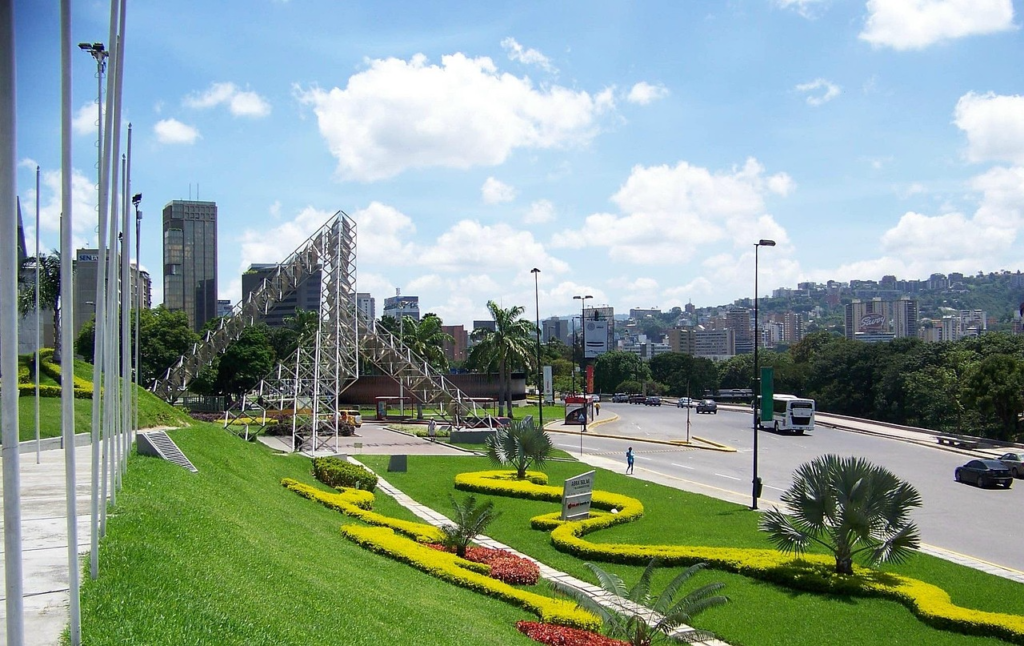
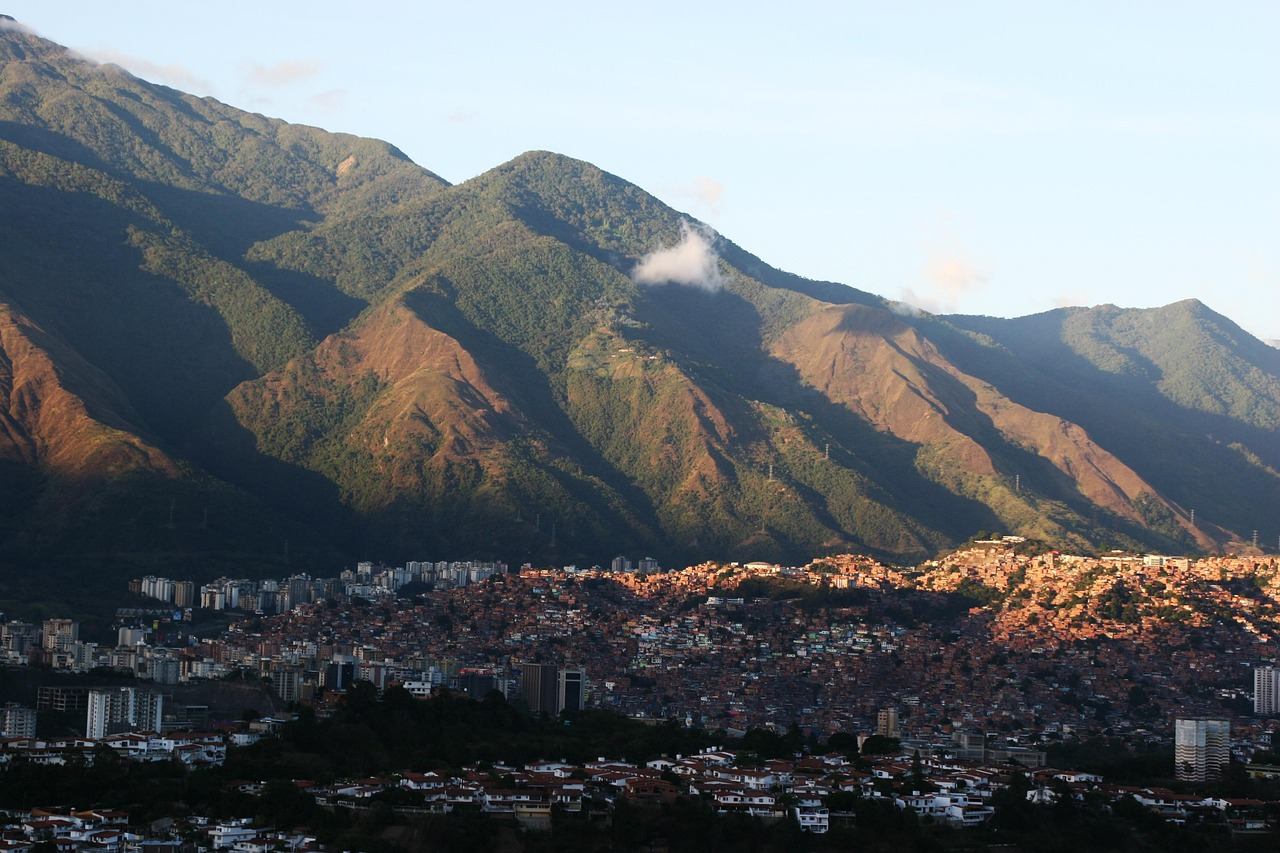
Caracas, Venezuela (Credit: https://pixabay.com/).
When it comes to Venezuela, the US transition from arbiter to aggressor did not occur overnight. Tensions had been escalating through expanded sanctions, an expanded naval presence and oil “quarantine” targeting Venezuelan tankers, repeated interdictions of vessels tied to sanctioned oil shipments, and air and maritime strikes framed as counter-narcotics operations but widely criticized as unilateral coercion. US forces positioned thousands of personnel and warships across the Caribbean in late 2025, enforcing a blockade-like restriction on oil exports and seizing multiple tankers as part of a campaign that Venezuela and many observers condemned as illegal aggression under international law. Policy analyses argue that such unilateral military action violates international law and sets a dangerous precedent for the region.
Yet the culmination of these measures into direct military action represents a decisive shift: coercion at the margins gave way to force at the core. Narratives invoking drug trafficking or democratic restoration now serve as moral pretexts for actions that are, in reality, unilateral assertions of dominance. Such precedents threaten to cascade globally, signaling to other powers that legality is subordinate to strategic interest, thereby eroding norms of sovereignty and non-intervention that underpin the international system.
This evolution raises urgent legal and normative questions. The United Nations Charter prohibits force against the territorial integrity or political independence of any state absent Security Council authorization or self-defense — conditions clearly unmet by the US operation. UN experts warn that lethal operations and regime capture violate international obligations, risk escalation, and threaten regional and global security. Even within the United States, debate rages: some policymakers and commentators frame the capture of Maduro as justified, while others warn that unilateral military action undermines international law, destabilizes the region, and risks entanglement in a conflict with no exit strategy.
The implications extend well beyond Venezuela. Latin America has long been wary of foreign intervention; historical precedents, such as the 1989 US invasion of Panama, remain potent reminders of disproportionate force justified by strategic or economic agendas. The rhetoric of drug control or democratic restoration often masks deeper objectives — access to resources, regional influence, and control over governance structures. The US decision to act unilaterally, outside multilateral frameworks, threatens to normalize intervention as a tool of policy, eroding confidence in global norms and potentially encouraging other powers to adopt similarly aggressive strategies.
History, too, offers sobering instruction. From the 1953 coup in Iran to interventions in Guatemala, Chile, Grenada, and Panama, imperial adventurism in the post-colonial era has repeatedly revealed itself as an anachronistic fiasco — justified in the language of order, freedom, or stabilization, yet producing outcomes that can neither be morally absolved nor fully subsumed into neat narratives of progress or security. Rather than consolidating legitimacy, such incursions fracture polities, radicalize opposition, delegitimize institutions, and haunt political life for generations. The afterlives of intervention routinely outstrip the intentions of the interveners, leaving behind contested sovereignties, enduring mistrust, and fragile state systems. Venezuela now risks becoming yet another site where the contradictions of imperial power reproduce an instability rather than resolve a crisis.
To act as an arbiter in the international system — a role that demands upholding law, norms, and negotiated settlements — requires restraint, multilateral engagement, and respect for peaceful resolution mechanisms. When a supreme arbiter resorts to unilateral force, capturing a foreign head of state without a transparent legal mandate or international approval, it becomes a sign of desperation masquerading as an assertion of dominance. This transformation carries consequences far beyond US–Venezuelan relations: it not only undermines the credibility of international institutions but also strains alliances and risks setting off a cascading effect in which the threshold for lawful intervention is weakened globally.
Whether one views Venezuela’s government as legitimate or flawed, the fundamental question remains: does the use of direct armed force by another state, in the absence of a clear multilateral mandate, strengthen or weaken the prospects for peace, justice, and democratic stability? The answer lies not only in strategic calculation but in normative commitment to the principles that underwrite international order.
When a self-proclaimed arbiter abandons diplomacy for force, it forfeits the mantle of guardianship and stoops to the level of an unadorned aggressor. The US intervention in Venezuela exemplifies this troubling transformation, with consequences reverberating across the hemisphere and potentially around the world. In a time of fractured norms, rising multipolarity, and competing power blocs, reasserting the primacy of international law, multilateral engagement, and sovereign equality has never been more urgent. Failure to do so risks cascading destabilization, in which might is mistaken for right, unilateral intervention becomes normalized, and the very foundations of global order erode under the weight of concentrated power.
To prevent such unilateral actions from undermining global order, the international community must reaffirm the primacy of multilateral mechanisms and insist that all interventions adhere to established legal frameworks, including Security Council authorization and respect for sovereignty. Diplomatic engagement should be prioritized over coercion, ensuring that disputes are resolved through negotiation, mediation, and peaceful settlement rather than through displays of military might. States wielding significant power, particularly those that claim global stewardship, ought to practice restraint, recognizing that the temptation to act unilaterally can erode both legitimacy and moral authority.
Economic and political incentives must be structured to encourage cooperation rather than confrontation, with sanctions and other measures employed as tools of negotiation rather than as preludes to force. Furthermore, transparent accountability — including public oversight, adherence to international norms, and mechanisms for redress when violations occur — is essential to restore trust, prevent escalation, and reinforce the principle that the international system is governed by law and not by the whims of the strongest actors.
DISCLAIMER: The views expressed are those of the authors and do not necessarily reflect the official policy or position of the Magazine and its editorial team. Views published are the sole responsibility of the author(s).
