

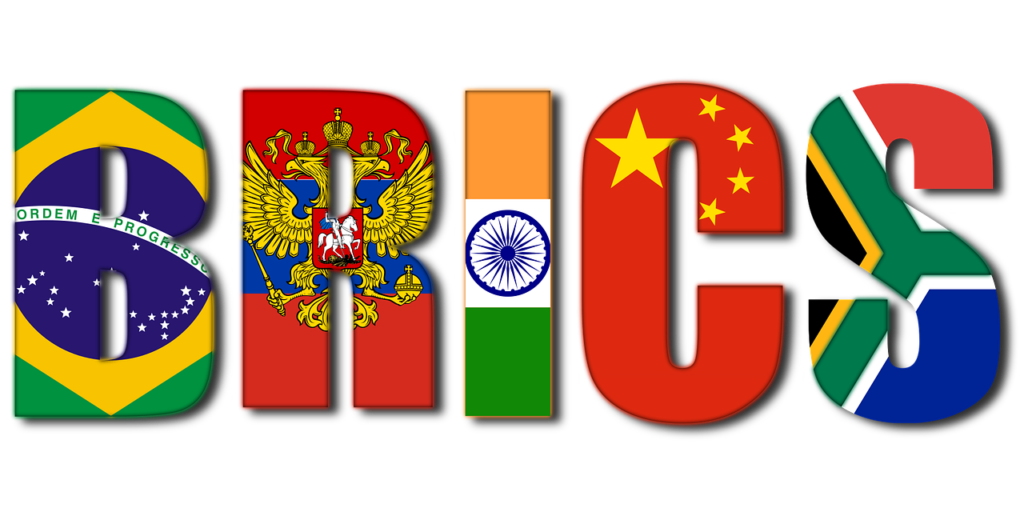
The architecture of global power, painstakingly constructed in the post-World War II era, is fracturing under the weight of its own contradictions and the rise of new aspirants. At the epicenter of this seismic shift stands BRICS+, an expanded coalition of emerging economies that is no longer content with merely participating in the existing system but is actively engaged in its recalibration. From its origins as a dialogue forum for Brazil, Russia, India, China, and South Africa, BRICS has metamorphosed into BRICS+, welcoming Egypt, Ethiopia, Iran, the United Arab Emirates, and Indonesia. This strategic enlargement is not a simple arithmetic addition of members; it is a geometric multiplication of influence, representing a concerted effort to dismantle unipolar hegemony and assert a multipolar reality across the interconnected realms of economics, politics, and planetary ecology.
The bloc’s evolution embodies a profound reimagining of global governance, financial sovereignty, and energy diplomacy, with ramifications that extend from regional bargaining tables to the very future of Earth’s climate. But to comprehend the ambition of BRICS+, one must closely look at its actions through the interlinked prism of the “three Ds”: deglobalization, dedollarization, and decolonialization. This triad forms the ideological and strategic scaffolding of the coalition.
Deglobalization here does not signify a retreat into autarky but a strategic recalibration of international engagement. It contests the universalist prescriptions of the Bretton Woods institutions and the Washington Consensus — often criticized for prioritizing capital mobility and austerity over local development needs. BRICS+ advocates for a world where global economic integration is preserved, but on terms that allow for greater national policy space, protection of strategic industries, and sovereignty over development pathways. Under this rubric, trade and investment are not eschewed, but reoriented toward platforms where member states can pursue industrial policy, strategic infrastructure, and localized resilience outside the strictures of open capital mandates. Such an orientation is a direct challenge to the geopolitical and economic logic that has dominated since the end of WWII.
Dedollarization is the tangible financial manifestation of this desire for autonomy. It is a systematic effort to reduce the bloc’s structural dependence on the US dollar as the primary reserve currency, medium for energy trade, and instrument for financial sanctions. By promoting local currency settlement frameworks, expanding currency swap agreements, and developing alternative cross-border payment systems like China’s CrossBorder Interbank Payment System(CIPS), BRICS+ seeks to insulate its economies from US monetary policy shocks and geopolitical leverage. Currency diversification efforts are now explicitly tied to trade agreements and energy deals, whereby key commodities are priced and settled in yuan, rupees, dirhams, or rubles. This endeavor reshapes global monetary hierarchies and asserts financial sovereignty, directly eroding a cornerstone of American power that has underpinned global finance for decades.
Decolonialization provides the broader ideological thrust, extending beyond historical colonialism to address contemporary forms of subordination in finance, technology, and knowledge production. It reflects an aspiration to dismantle lingering hierarchies of global power and assert epistemic and political autonomy. For BRICS+, this means challenging the West’s monopoly on setting standards, controlling critical technologies, and defining the narratives around development and climate responsibility. It is a claim for rightful agency in shaping the rules of the global order, not merely as participants but as coauthors of new institutional, financial, and technological frameworks.
This triad elevates BRICS+ from a mere economic bloc to a coalition with planetary consequence, a duality illuminated by historian Dipesh Chakrabarty’s distinction between the “global” and the “planetary.” The global encompasses human-made structures — markets, nations, and institutions. The planetary denotes the Earth system — climate, carbon cycles, and ecological thresholds. BRICS+ operates precisely at this fraught intersection: its pursuit of global power and development irrevocably shapes planetary trajectories, making it a central actor in debates over climate justice, energy governance, and sustainable industrialization.
Credit: https://pixabay.com/.
BRICS began as a regional initiative, a collective of major Global South economies seeking to amplify their voice within established forums like the G20, International Monetary Fund (IMF), and World Bank. Its early signature achievement, the New Development Bank (NDB), was founded to provide capital for infrastructure and sustainable development projects, offering an alternative to the conditionality- laden financing of Bretton Woods institutions. This period laid the groundwork for the Three Ds, fostering a spirit of strategic autonomy while remaining within the broader global economy.
The inclusion of new members in 2024 marked a decisive pivot for BRICS+, transforming it from a regional voice into a global planetary actor. The expansion was geostrategically astute, incorporating pivotal states across critical regions: major Arab Gulf energy producers such as the UAE; key Horn of Africa states, including Egypt and Ethiopia; a major Southeast Asian archipelago, Indonesia; and a longstanding regional power in West Asia, Iran. This constellation grants BRICS+ unprecedented leverage by combining multiple forms of energy and geopolitical strength. Russia and Iran provide vast fossil fuel reserves, while the UAE contributes both hydrocarbon wealth and a growing renewable energy agenda.
China and India serve as enormous demand engines, being the world’s largest energy importers and leading renewable energy installers. Brazil, Ethiopia, and Indonesia complement the bloc with significant renewable potential, including hydro, wind, solar, and geothermal capacity. Strategic gateways further enhance the bloc’s influence: Egypt controls the Suez Canal, the UAE operates a global logistics hub, and Indonesia oversees critical sea lanes. This fusion of producers and consumers, of fossil and renewable potential, allows BRICS+ to transcend traditional energy dichotomies. It can internally balance supply and demand, coordinate strategic infrastructure projects such as pipelines and grid interconnections, and collectively influence global energy pricing and investment flows.
Energy is the core of BRICS+’s material power and its most profound planetary dilemma. The bloc accounts for nearly half of global energy production and consumption. Recent empirical assessments underscore its dual nature. In 2023, BRICS countries added a staggering 331 gigawatts of renewable capacity — surpassing the entire European Union — led by China’s and India’s breakneck solar and wind expansion. Projects like Brazil’s planned offshore wind complexes and Egypt’s ambitious green hydrogen commitments point to a future where the bloc could spearhead the global energy transition.
Yet, this green momentum coexists with a deep-seated fossil fuel dependency. Current construction data reveals a stark contradiction: BRICS has roughly ten times more fossil fuel capacity under development than renewable capacity, suggesting that future emissions lock-in remains a central risk. Russia is aggressively developing new Arctic oil and gas fields; Iran and the UAE continue to expand hydrocarbon exports; and India and Indonesia see coal as essential for baseload power, poverty alleviation, and industrial growth. This highlights the central tension within BRICS+: the clash between the developmental imperatives of sovereign states seeking industrialization, employment, and energy security, and the planetary imperative of rapid decarbonization within a carbon-budgeted world.
The bloc’s May 2025 Joint Energy Statement, which calls for a “just, orderly, and inclusive energy transition,” is a diplomatic acknowledgment of this tension. It seeks to reconcile the right to develop with climate responsibility. However, operationalizing such a vision requires navigating immense internal diversity. A just transition for coal-dependent South Africa or India differs fundamentally from that for oil-dependent Iran or Russia, or for hydropower-rich but capital-constrained Ethiopia.
The geopolitical ramifications of BRICS+’s energy heft are immense. Its influence now directly intersects with and often overlaps with groups like OPEC+. With Russia, Iran, and the UAE as members of both, BRICS+ injects a broader geopolitical and developmental agenda into energy market management. While OPEC+ focuses on supply quotas and price stability, BRICS+ integrates these concerns with longer-term goals of technology transfer, infrastructure development, and dedollarized trade. This fusion has created a more resilient and politically insulated energy network for its members, challenging the traditional leverage of Western consumers and financial centers.
Furthermore, BRICS+ is actively reshaping the financial architecture of energy. Dedollarization efforts are most advanced and pragmatic in this sector. Agreements to trade oil, gas, and liquefied natural gas in Chinese yuan, UAE dirhams, Indian rupees, and Russian rubles are proliferating, even as basket currency experiments gain traction. The NDB is financing not just traditional infrastructure but also smart grids, renewable parks, and cross-border electricity corridors, reducing reliance on Western capital markets and conditional financing. This financial autonomy is the lifeblood of decolonialization, allowing members to pursue large-scale energy projects without subjecting themselves to the political conditions often attached to Western funding.
It is here that Chakrabarty’s planetary register becomes inescapable. Every decision on financing a new coal plant in Bangladesh, a transcontinental gas pipeline, or a solar megacomplex in the Atacama is simultaneously a global act of economic development and a planetary act affecting carbon budgets and climate stability. BRICS+’s rapid renewable expansion is a net positive for the climate system, potentially bending the global emissions curve. Conversely, its concurrent fossil fuel expansion risks locking in emissions that could singlehandedly exhaust a significant portion of the remaining carbon budget, making the goals of the Paris Agreement unattainable. The bloc thus holds unparalleled agency: it can be the principal engine of decarbonization or its greatest impediment.
To evolve from a coalition of grievance into a constructive architect of a stable, equitable, and sustainable multipolar order, BRICS+ must institutionalize cooperation that marries geopolitical ambition with planetary stewardship. A just transition clearinghouse under the New Development Bank is essential. It would pool research, co-finance, and subsidize green technologies — green hydrogen electrolyzers, advanced batteries, and smart-grid systems — ensuring diffusion from leaders like China to resource-rich, capacity-limited members such as Iran, Ethiopia, and South Africa. This mechanism operationalizes a just transition, enabling late-industrializing economies to pursue low-carbon growth without sacrificing development.
A Basket Currency Unit for energy and infrastructure trade, anchored in member currencies and potentially linked to commodities, would stabilize transactions, mitigate currency risks and deepen financial integration. Mandatory planetary impact assessments for all NDB-financed projects would embed ecological accountability, evaluating lifecycle emissions, alignment with carbon budgets, and climate resilience. Projects with clear net-zero or superior adaptation pathways would gain preferential financing, steering capital toward sustainable trajectories.
A unified climate and energy diplomacy corps would harmonize BRICS+ positions in forums such as the UNFCCC and G20, strengthening advocacy for equitable carbon space, and technology transfer, while a critical minerals and supply chain pact would secure essential resources for the green and digital transitions, reduce external dependencies, and retain value within the bloc.
Implemented coherently, these mechanisms could position BRICS+ as a model of multipolar governance that reconciles development with planetary limits. Failure to act decisively risks fossil fuel dependence and accelerated climate disruption, shaping both the bloc’s legacy and the broader trajectory of twenty-first-century geopolitics and planetary stewardship.
DISCLAIMER: The views expressed are those of the authors and do not necessarily reflect the official policy or position of the Magazine and its editorial team. Views published are the sole responsibility of the author(s).
