

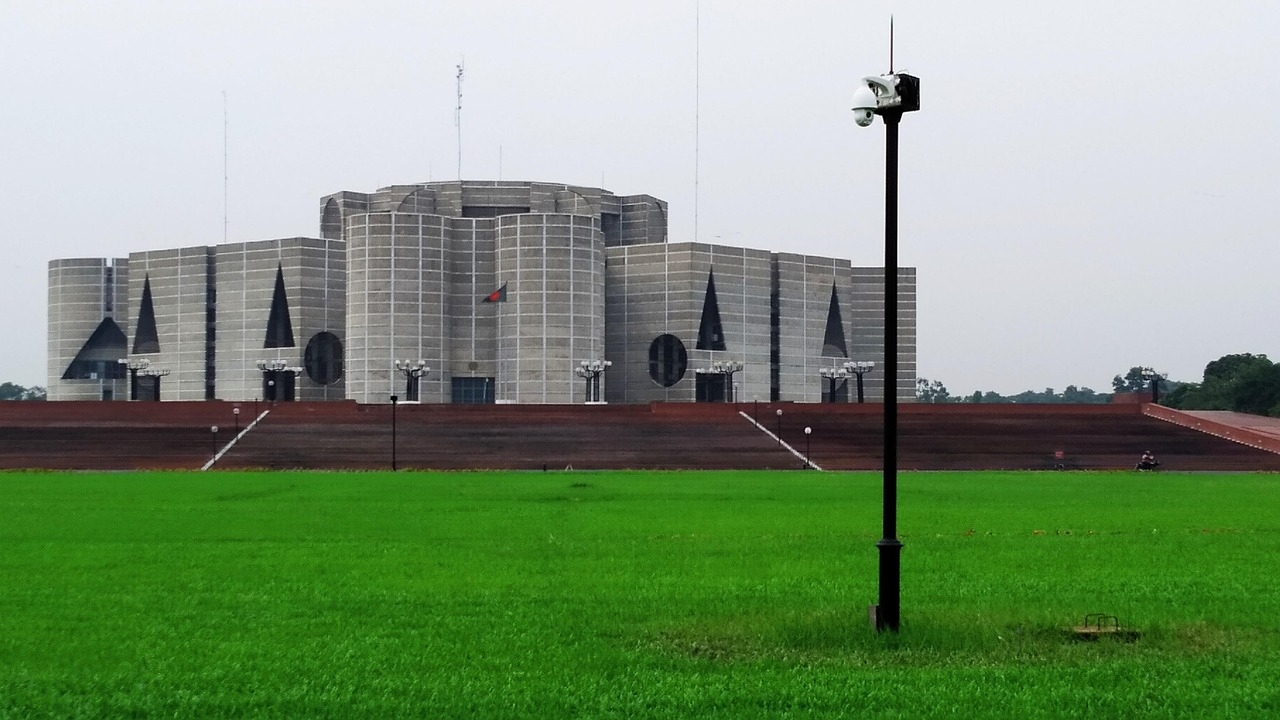
At first glance, the phrase, “history of the present,” appears oxymoronic. History implies distance; the present seems too proximate, unsettled, and unfinished to be rendered historical. Yet for Michel Foucault, this apparent contradiction names the very task of critique. A history of the present does not proceed chronologically, narrating events in linear succession. It works genealogically, tracing how contingent practices, power relations, and regimes of knowledge have sedimented into what now appears natural, necessary, or inevitable. The question is not simply what happened, but how the present has been organized as it is — as a happenstance rather than a destiny. s
Walter Benjamin radicalizes this approach by rejecting the illusion of historical continuity altogether. Against historicist narratives of progress, he insists that the present is a moment of rupture — a Jetztzeit, a “now-time” charged with danger, in which the past erupts rather than recedes. History, for Benjamin, does not flow smoothly into the present; it flashes up within it, demanding recognition of what was foreclosed, betrayed, or left unfinished. Read together, Foucault and Benjamin unsettle the present as a stable or self-explanatory moment. They reveal it as a contested terrain, structured by prior political settlements and haunted by unresolved struggles. Applied to Bangladesh, this perspective shows that its current political impasse is not an aberration but the cumulative effect of recurrent logics, exclusions, and compromises that continue to govern the present.
To engage in the history of the present is to resist the seduction of immediacy and to insist that what confronts us as crisis, rupture, or exceptional moment is in fact the layered outcome of enduring institutional habits, power arrangements, and deferred reckonings. Foucault used the phrase not to historicize the past for its own sake, but to denaturalize the present — to show that what appears inevitable is contingent, constructed, and therefore open to transformation. Seen through this lens, Bangladesh’s political condition is not merely the consequence of recent misrule or partisan excess, though different political leaders varyingly contributed to its developments; it is the historically sedimented result of paths taken and alternatives repeatedly foreclosed.
The inherited structures of British rule in Bengal persist in the present not as distant origins but as rationalities continuously reactivated. Colonial governance emphasized control over consent: law as a technology of order, administration as centralized, impersonal, and coercive. Independence did not dismantle this apparatus; it was inherited. As Hannah Arendt reminds us, liberation from domination does not by itself secure freedom. Without institutionalized participatory power, revolutionary moments risk reverting to forms of executive dominance. In Bangladesh, the language of popular sovereignty — manifested in landmark moments such as the 1970 general election, the 1971 Liberation War, and mass uprisings including the 1990 movement against Ershad and the nationwide July 2024 protests that led to the ouster of the Hasina government, as well as national and local elections—coexists with emergency powers and expansive administrative discretion, so that liberation promised rupture, yet governance often reproduced control under a new guise.
This tension is evident in the first post-independence government under Sheikh Mujibur Rahman. Revered as the leader of the liberation struggle, Mujib nonetheless centralized authority rapidly, curtailed civil liberties, and instituted one-party governance through BAKSAL (the Bangladesh Krishak Sramik Awami League), the sole legal party created under the Fourth Amendment that effectively abolished multiparty competition in 1975. Confronted with economic collapse and political fragmentation, emergency measures became instruments of survival rather than exception.
In Arendtian terms, the revolutionary promise of freedom gave way to the imperatives of order, revealing an incipient tendency toward what Arendt calls total domination—not totalitarianism in its fully realized form, but a drift toward the fusion of state, party, and executive authority that erodes the space of plurality and action. The central paradox thus emerges clearly: liberation inaugurated the nation, yet the structures it produced facilitated continuity in the guise of change.
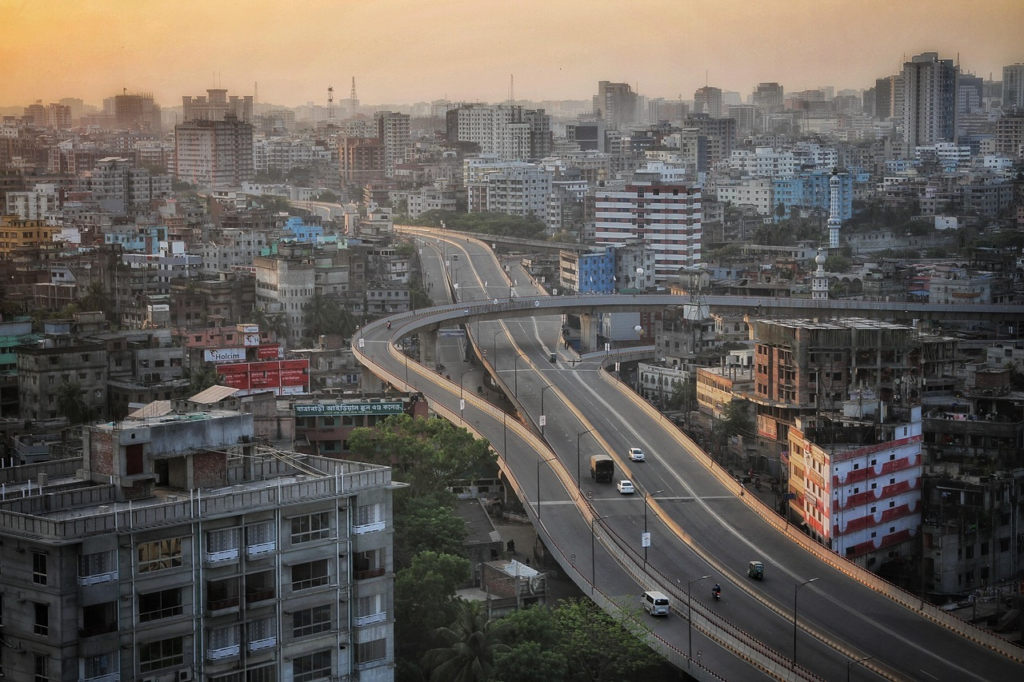
Dhaka, Bangladesh (credit: https://pixabay.com/).
Across military and civilian administrations, the same governing rationalities recur. Ziaur Rahman, rising from a military coup, sought to civilianize military rule through controlled pluralism and constitutional amendments that stopped short of genuine multiparty democracy, embedding military prerogatives within ostensibly democratic institutions. H. M. Ershad institutionalized military dominance overtly, ruling through martial law while cultivating a managed political order. Talukdar Moniruzzaman’s concept of the “military withdrawal of democracy” reveals that even when the military formally retreats from direct rule, it does not relinquish its structural influence; instead, its priorities, prerogatives, and modes of control are embedded within civilian institutions, legal frameworks, and political practices, allowing military rationalities to persist under the appearance of democratic governance.
In Bangladesh, emergency measures once justified as temporary have become routine. Elections are managed, legality selectively applied, and dissent reframed as a threat. This normalization hollows out democratic life, making what was once extraordinary administratively banal. The persistence of exceptional measures across regimes demonstrates structural continuity rather than episodic disruption.
Khaleda Zia presided over a confrontational civilian polity in which emergency powers and street-level coercion were progressively normalized. Sheikh Hasina deepened this trajectory by consolidating executive authority and institutionalizing surveillance, enforced disappearances, securitized dissent, and legal exceptionalism, consistently invoking stability and development as legitimating discourses. Despite their ideological differences, these leaders represent iterations of the same governing rationalities. Hasina’s tenure most clearly exposes the structural entrenchment of executive dominance: the incarceration of Khaleda Zia through politically charged trials widely criticized for due-process violations, alongside restrictions on her access to adequate medical care, illustrates the convergence of personal vendetta and institutional control.
At the same time, Hasina’s repeated electoral victories — frequently contested and accompanied by allegations of vote manipulation — demonstrate how procedural forms of democracy can be preserved even as substantive deliberation, accountability, and political pluralism are steadily hollowed out. Within this framework, the recurrent grammar of command endures, as militarized authority, legal exceptionalism, and coercive practices are not dismantled but adapted into civilian governance.
Economic narratives constitute another layer of genealogy. Bangladesh’s celebrated growth and export-led development function as political technology: prosperity is offered to compensate for democratic deficits, stability invoked to depoliticize dissent. Yet growth coexists with inequality, labor precarity, and shrinking civic space. Detached from accountability, developmentalism becomes a means of control rather than emancipation. Across decades, economic rationalities intertwine with political governance, reproducing patterns of inclusion and exclusion.
International actors further shape the political present. Donors, regional powers, and global institutions often prioritize predictability over democratic process, reinforcing authoritarian tendencies. Elections are evaluated less for fairness than for outcomes aligned with strategic or economic interests. The history of the present is therefore also a history of global complicity, where sovereignty is selectively enforced and democratic norms unevenly applied.
The July 2024 uprising illustrates the present as a diagnostic site rather than a temporal rupture. Benjamin’s Jetztzeit captures this dynamic: moments of danger illuminate latent possibilities but can be folded back into familiar continuities if unseized. Bangladesh’s history is replete with such moments, where mobilization revealed capacities for democracy yet failed to convert potential into durable institutions.
Within this historically saturated present, the Interim Government functions as a site where inherited rationalities confront visibility and contestability. Its mandate is not simply procedural; its legitimacy hinges on whether it can arrest democratic erosion: restoring institutional credibility, restraining executive overreach, safeguarding civil liberties, depoliticizing state bodies, and ensuring elections that are substantively fair. The Interim Government is simultaneously bound by the past and called to act upon it. Its challenge is to prevent repetition: the reproduction of exceptionalism, executive dominance, and depoliticized development under the guise of transition. Its authority is measured not by neutrality but by its capacity to translate revolutionary energies into institutional durability.
The history of the present warns against prioritizing stability at the cost of accountability. Stability achieved through suspension of democratic norms weakens institutions and renders politics brittle. Postponing democratic repair entrenches pathologies that uprisings seek to overcome. The present is historically dense, structured by patterns of authority, yet malleable if these patterns are consciously confronted. Ultimately, the question confronting Bangladesh is whether politics will remain captive to elite bargaining and managed consent or whether this interregnum can inaugurate a different political grammar. The Interim Government cannot undo history, but it can refuse to reenact it. By recognizing the present as historically produced — and therefore politically alterable — it can choose restraint over expediency, transparency over control, and institutional repair over symbolic gestures. Failure would confirm a pattern in which every crisis promises renewal but delivers repetition.
Bangladesh’s present is both dense and malleable: a site where past logics converge, tensions crystallize, and possibilities flash up. Structures once justified as temporary — emergency laws, executive prerogatives, and developmental compensations — persist, adapt, and shape the field in which democratic practice occurs. Whether July 2024 enters history as a transformative interruption or another absorbed moment depends on whether the Interim Government seizes the opportunity to intervene in these persistent logics. The history of the present is a guide: transformation is possible, but only through conscious engagement with the sedimented rationalities that shape the nation.
Time is running out for the Interim Government to determine whether its legacy will be defined by decisive restraint or consequential omission. Its mandate was never to govern expansively, yet neither was it to defer hard decisions under the alibi of transience. The verdict will emerge in the months and years following the February 12 election, the first since the mass uprising that reshaped the political landscape, as reported by Associated Press. Once the ballots are cast, the burden will shift to the incoming government — not only to remedy the interim period’s deficits, but to demonstrate that electoral legitimacy can mature into governing capacity, moral clarity, and the resolve to confront problems no longer cushioned by transience.
Moving beyond procedural legitimacy toward substantive democratic repair demands five non-negotiable imperatives: institutional credibility must be restored through demonstrable independence — not symbolic reform — insulating key bodies from partisan capture and executive interference; the entrenched logic of exception must be dismantled by decisively curbing emergency powers and subjecting all extraordinary executive prerogatives to strict legal and parliamentary oversight; the public sphere must be rebuilt by unequivocally safeguarding civil liberties, normalizing dissent, and ending the criminalization of opposition politics; the state must be depoliticized through merit-based recruitment, enforceable accountability, and the reversal of bureaucratic loyalty regimes; and elections must be genuinely democratic — not merely administered — through institutions and practices that guarantee independence, transparency, and an irreducible level playing field.
To ensure genuinely democratic elections, all future elections must be conducted under an interim government appointed specifically for that purpose, accompanied by credible monitoring, impartial oversight, and enforceable safeguards against coercion and manipulation.
Failure to take these steps would confirm the familiar pattern in which every crisis promises renewal but reproduces continuity. The history of the present warns that stability built on suspended democratic norms erodes institutions and renders politics brittle. The present is dense yet contingent: interrupting history’s return requires an active refusal of its sedimented logics. Without deliberate institutional restraint and substantive democratic repair, renewal will be announced, postponed, and quietly foreclosed.
DISCLAIMER: The views expressed are those of the author(s) and do not necessarily reflect the official views or position of the Magazine and its editorial team. The views published are the sole responsibility of the author(s).
